


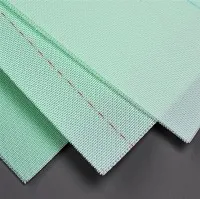

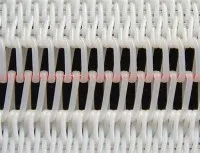

Polyester Forming Fabric
Polyester forming fabric is a type of fabric commonly used in the paper and pulp industry. It plays a crucial role in the forming process of paper.Polyester is a synthetic polymer that makes the fabric strong, durable, and resistant to wear and tear. The forming fabric is designed with a specific weave and texture to facilitate the uniform distribution of fibers and the efficient removal of water during the paper-making process.The main function of the polyester forming fabric is to support and shape the wet web of fibers as they are being formed into paper. It helps to create a uniform sheet with good sheet properties, such as thickness, uniformity, and surface quality.


Benefits of Polyester Forming Fabric
High Strength and Durability
Polyester fibers possess excellent tensile strength, which translates to robust composites that can withstand significant loads without breaking. The durability of polyester forming fabrics ensures long-lasting performance in various environments.
Chemical Resistance
Polyester is resistant to many chemicals, including acids and alkalis. This characteristic makes composites reinforced with polyester forming fabrics suitable for applications in harsh chemical environments.
Thermal Stability
Polyester has good thermal stability compared to other fibers, allowing for a wider processing temperature range during composite manufacturing. This property is crucial in ensuring that the fabric does not degrade prematurely during the curing process.
Good Electrical Properties
Polyester forming fabrics provide electrical insulation, which is vital in applications where electrical components need protection from external interference.
UV Resistance
Polyester fibers have inherent resistance to ultraviolet (UV) radiation, which helps protect composites from degradation caused by prolonged exposure to sunlight.
Low Shrinkage
During the curing process, polyester forming fabrics exhibit low shrinkage rates, which contributes to the dimensional stability of the final composite product.
Ease of Handling
Due to its balance of flexibility and rigidity, polyester forming fabric is relatively easy to handle during layup procedures, facilitating the manufacturing process.
Cost-Effectiveness
Compared to other high-performance fibers like carbon or aramid, polyester forming fabrics offer a cost-effective solution without compromising significantly on mechanical properties.
Void Content
Polyester forming fabrics tend to have lower void content compared to non-woven fabrics, resulting in better mechanical properties in the final composite.
Why Choose Us
Customer Service
We earn your respect by delivering on time and on budget. We built our reputation on exceptional customer service. Discover the difference it makes.
Competitive Pricing
We offer competitive pricing for our services without compromising on quality. Our prices are transparent, and we do not believe in hidden charges or fees.
One-Stop Service
We promise to provide you with the fastest reply, the best price, the best quality, and the most complete after-sales service.
Quality Assurance
We have a rigorous quality assurance process in place to ensure that all our services meet the highest standards of quality. Our team of quality analysts checks each project thoroughly before it is delivered to the client.
Customer Satisfaction
We are committed to delivering high quality services that exceed our clients' expectations. We strive to ensure that our clients are satisfied with our services and work closely with them to ensure their needs are met.
State-of-the-art Technology
We use the latest technology and tools to deliver high quality services. Our team is well-versed in the latest trends and advancements in technology and uses them to provide the best results.

What Is The Composition Of Polyester Forming Fabric
Polyester forming fabric is typically composed of polyester fibers. Polyester is a synthetic polymer that is widely used in textiles due to its properties such as strength, durability, and resistance to wrinkles and shrinkage. The fibers are often woven or knitted together to form a fabric with a specific weave and texture.
The composition of polyester forming fabric may vary depending on the specific application and requirements. Some polyester forming fabrics may also include other fibers or additives to enhance certain properties or performance characteristics. These could include fibers such as nylon, polypropylene,as well as additives such as fire retardants or anti-static agents.
The choice of fibers and any additives used in the composition of polyester forming fabric can impact its properties, such as strength, porosity, and resistance to chemicals and heat. The composition is carefully selected to meet the specific needs of the paper industry and the paper-making process.
If you have any more questions about the composition of polyester forming fabric or if you'd like more detailed information, feel free to ask. I'll do my best to provide you with the answers you need.
How is polyester forming fabric manufactured
Fiber selection
High-quality polyester fibers are chosen based on the desired properties of the forming fabric, such as strength, durability, and porosity.
Yarn spinning
The selected polyester fibers are spun into yarns. This can be done using various spinning methods, depending on the specific requirements of the fabric.
Weaving or knitting
The yarns are then woven or knitted to form the fabric. The weave pattern and stitching determine the fabric's characteristics, such as its pore size and distribution.
Finishing
After weaving or knitting, the fabric may undergo additional processing steps to enhance its properties. This can include heat setting, calendaring, or coating with specialized finishes.
Quality control
The finished fabric undergoes strict quality control checks to ensure it meets the required specifications. This may involve tests for tensile strength, porosity, dimensional stability, and other critical parameters.
Cutting and packaging
The fabric is cut to the desired size and shape, and then packaged for shipment to customers.
What are the properties of polyester forming fabric
Strength And Durability
Polyester is a strong and durable synthetic polymer, which translates into a fabric that can withstand the demanding conditions of the paper-making process. It resists wear and tear, ensuring a longer lifespan.
Chemical Resistance
Polyester forming fabric is resistant to a wide range of chemicals and solvents commonly used in the paper industry. This makes it suitable for use in various stages of the paper-making process, including those involving bleaching, sizing, and coating.
Heat Resistance
Polyester forming fabric can withstand high temperatures without significant deformation or degradation. This property is important in paper-making processes where heat is applied, such as drying or calendaring.
Porous Nature
Polyester forming fabric has a controlled porosity, which allows for the efficient removal of water during the paper-making process. The porosity can be adjusted depending on the specific requirements of the paper being produced.
Resistance To Static Build-up
Polyester forming fabric has low static generation, which helps prevent the accumulation of static electricity during the paper-making process. This property is important to avoid paper sheet sticking or static discharge.
Good Dimensional Stability
Polyester forming fabric maintains its dimensions and shape over time, ensuring consistent performance throughout its lifespan. This is crucial for maintaining the quality and uniformity of the paper being produced.
Lightweight
Polyester forming fabric is relatively lightweight compared to other materials used in paper-making, making it easier to handle and install in paper machines.
Cost-effective
Polyester forming fabric is generally more cost-effective than alternative materials, making it an attractive option for paper manufacturers looking to optimize their costs.
How Does The Weave Of Polyester Forming Fabric Affect Its Performance
Pore Size And Distribution
The weave pattern determines the size and distribution of pores in the fabric. A tighter weave results in smaller pores, which can lead to better dewatering and higher paper quality. Conversely, a looser weave may have larger pores, affecting water removal and paper uniformity.
Strength And Durability
The weave structure influences the strength and durability of the fabric. A well-constructed weave can enhance the fabric's resistance to wear and tear, ensuring a longer lifespan.
Fluid Passage
The weave affects the flow of fluids through the fabric. A properly designed weave allows for efficient water removal and uniform distribution of fibers, contributing to better paper formation.
Linting And Fiber Retention
The weave can impact the ability of the fabric to retain fibers and prevent linting. A weave that traps fibers effectively can improve the paper's surface finish.
Stiffness And Flexibility
The weave can influence the stiffness or flexibility of the fabric. A stiffer fabric may provide better support in some applications, while a more flexible fabric can adapt to the contours of the paper machine.
Resistance To Clogging
The weave can affect the fabric's resistance to clogging. A weave that allows for easy cleaning and prevents the buildup of debris can ensure consistent performance over time.
Single-layer Forming Fabric
This is the most basic type of polyester forming fabric, consisting of a single layer of woven or knitted polyester fibers.
Double-layer Forming Fabric
It combines two layers of polyester fabric to provide enhanced dewatering and paper quality.
Multilayer Forming Fabric
These fabrics have multiple layers of polyester or a combination of polyester and other fibers. They offer additional benefits such as improved strength and durability.
Coated Forming Fabric
A coating, such as polyurethane or silicone, may be applied to the polyester fabric to enhance its properties, such as resistance to abrasion or improved release characteristics.
Specialty Forming Fabric
Depending on the specific paper-making requirements, there are specialty polyester forming fabrics available, such as those with enhanced porosity for high-speed machines or fabrics with specific finishes for moisture control.

What Are The Factors That Affect The Cost Of Polyester Forming Fabric
Raw Material Prices: The cost of raw materials, such as polyester and reinforcement fibers, directly impacts the price of forming fabrics. Fluctuations in the prices of petroleum, from which many polymers are derived, can cause variability in raw material costs.
Manufacturing Process: The complexity and efficiency of the weaving or knitting process used to create the forming fabric influence the cost. More advanced or specialized manufacturing techniques, which may require specialized equipment or skilled labor, can increase production costs.
Weave Pattern and Density: Different weave patterns and densities affect the fabric's properties and, consequently, its cost. A higher weave density or more intricate patterns may require more material and more precise manufacturing, driving up expenses.
Quality of Materials: Higher quality yarns or fabrics, which offer better performance characteristics, generally cost more. This includes yarns with superior tensile strength, durability, or resistance to environmental factors.
Size and Quantity: The size of the rolls or the quantity of forming fabric ordered can impact the price per unit. Large orders may benefit from economies of scale, resulting in lower prices per unit area, while smaller quantities might be more expensive due to setup costs.
Customization: Customized forming fabrics, which are designed to meet specific customer requirements, often incur additional costs due to the need for unique designs, dyes, or finishes.
Supply Chain Factors: Transportation costs, import duties, and exchange rates can affect the price of forming fabrics. For instance, fabrics sourced internationally may be subject to tariffs or higher shipping fees compared to locally produced materials.
Market Demand: High demand for forming fabrics can drive up prices, while a saturated market or excess inventory may result in lower prices to encourage sales.
Regulatory Compliance: Meeting industry standards and regulatory requirements can add to the cost of producing forming fabrics. Certifications and testing to ensure product quality and safety can be costly.
Research and Development: Investment in research and development to create new fabric technologies or enhance existing ones can increase the cost of the final product.

What Are The Factors To Consider When Choosing A Supplier Of Polyester Forming Fabric
Quality
The quality of the forming fabric is crucial. Look for a supplier that offers high-quality polyester forming fabric with good durability, dimensional stability, and uniform texture.
Technical Expertise
The supplier should have in-depth knowledge and technical expertise in the production of polyester forming fabric. They should be able to provide professional advice and solutions based on your specific needs.
Reputation And Experience
Check the reputation of the supplier in the industry. A supplier with a good reputation and extensive experience is more likely to deliver reliable products and services.
Product Range
Ensure the supplier offers a wide range of polyester forming fabrics to meet different application requirements. This allows for more flexibility in choosing the most suitable fabric for your specific needs.
Customization Capabilities
If you have specific requirements for the forming fabric, such as thickness, weight, or other properties, choose a supplier that can offer customization options to meet your unique needs.
Supply Capacity And Delivery Time
Consider the supplier's production capacity to ensure they can meet your volume requirements. Additionally, inquire about their delivery time to ensure timely supply.
Pricing
Compare the pricing of different suppliers to ensure you get a competitive quote. However, don't compromise on quality for the sake of a lower price.
Technical Support And After-sales Service
A good supplier should provide technical support and after-sales service to address any issues or concerns that may arise during the use of the forming fabric.
Certification And Compliance
Verify that the supplier complies with relevant quality standards and certifications. This ensures that the products meet the required specifications.
Communication And Responsiveness
Good communication with the supplier is essential. A responsive supplier who listens to your needs and provides prompt communication throughout the procurement process is preferred.

Can polyester forming fabric be recycled or reused
Some recycling facilities materials, including forming fabric. These facilities may be able to recycle the fabric by breaking it down into its component materials and using them to create new products.
If the forming fabric is in good condition and can still perform its intended function, it may be possible to reuse it. This could involve cleaning and repairing the fabric before reusing it in the paper-making process.
Even if the fabric cannot be recycled into new forming fabric, it may still have value as a lower-grade material. It could be repurposed for non-critical applications or used to create products with less stringent requirements.
In some cases, the fabric may be suitable for energy recovery. This involves incinerating the fabric to generate heat or electricity.However, the recyclability and reuse potential of polyester forming fabric can vary depending on factors such as the condition of the fabric, the presence of contaminants, and the availability of recycling infrastructure. It's important to note that the recycling process may require specialized facilities and technologies.
What Is The Difference Between Polyester Forming Fabric And Other Types Of Woven Fabrics
Application-specific Design
Polyester forming fabric is engineered to meet the unique requirements of the paper-making process, such as efficient water removal, fiber retention, and uniform paper formation.
Pore Size And Distribution
The weave of polyester forming fabric is often designed to control the size and distribution of pores, which affects the dewatering and paper quality.
Durability And Resistance
Polyester forming fabric is subjected to harsh conditions in the paper machine, so it typically has enhanced durability and resistance to abrasion, chemicals, and high temperatures.
Cleaning And Maintenance
The fabric may require specific cleaning methods and maintenance schedules to ensure its performance and longevity, as debris and contaminants can affect the paper-making process.
Specialized Properties
Polyester forming fabric may have additional properties, such as moisture control, linting prevention, or resistance to staining.
Cost
The cost of polyester forming fabric can be higher compared to some other types of woven fabrics due to its specialized design and application.Compared to general-purpose woven fabrics used in clothing or other applications, polyester forming fabric undergoes specific engineering and customization to optimize its performance in the paper-making process.
Our Factory
The company is a professional paper mesh and industrial mesh manufacturing enterprises, with domestic and international world advanced level of paper mesh, industrial mesh complete sets of production equipment and technology. We has 3 sets of Swedish TEXO 12.5 meters loom, four warp beam heavy duty loom, Swedish TEXO warping machine, Norwegian 13.5 meters hot air sizing machine, Austrian automatic inserting and joining machine, American Nordson brushing and gluing machine, Swiss Lippo permeability tester and other advanced equipment and testing instruments. Our products are exported to many countries, such as Russia, France, Portugal, India, Pakistan, Iran, Turkey, Thailand, Indonesia and so on.


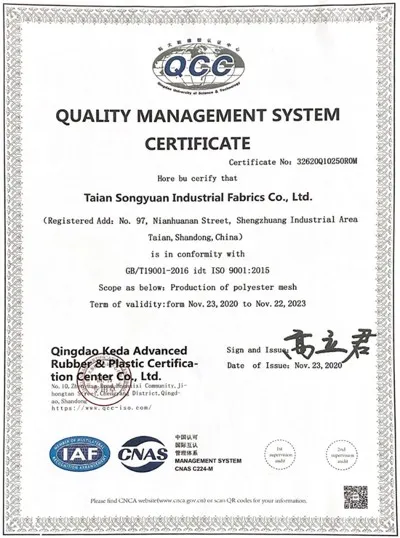
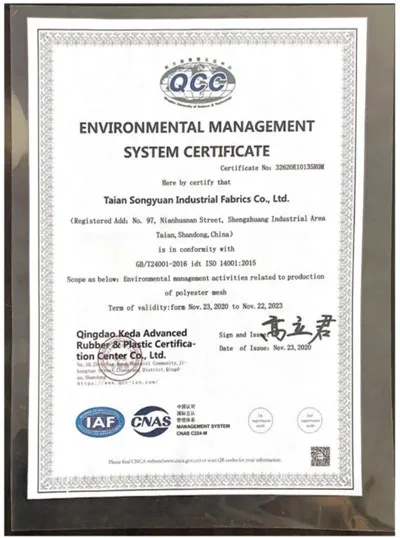
Our Certificate

FAQ
Q: What is polyester forming fabric?
Q: What are the properties of polyester forming fabric?
Q: What are the uses of polyester forming fabric?
Q: What is the difference between polyester forming fabric and other types of woven fabrics?
Q: How is polyester forming fabric made?
Q: What are the advantages of using polyester forming fabric?
Q: How to clean polyester fabric?
Q: How do you care for polyester forming fabric?
Q: Can polyester forming fabric be recycled?
Q: What is the difference between woven and nonwoven fabrics made from polyester fibers?
Q: How does the weave pattern affect the properties of polyester forming fabric?
Q: What is the difference between plain weave and twill weave in polyester forming fabric?
Q: What is the thread count of polyester forming fabric?
Q: What is the yarn size of polyester forming fabric?
Q: How does the dyeing process affect the properties of polyester forming fabric?
Q: Can polyester forming fabric be printed on?
Q: What is the shrinkage rate of polyester forming fabric?
Q: Can polyester forming fabric be coated with other materials?
Q: How does the temperature affect the properties of polyester forming fabric?
Q: What is the lifespan of polyester forming fabric?