




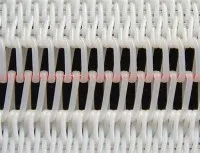

Sludge Dewatering Mesh Belt
Sludge dewatering mesh belt is a type of industrial belt used in the process of sludge dewatering. It plays a crucial role in separating and removing excess water from sludge.The mesh belt is typically made of a synthetic or metallic material with a mesh or perforated structure. The holes or openings in the mesh allow water to pass through while retaining the solid sludge particles.During the dewatering process, the sludge is applied to the mesh belt, and as the belt moves, the weight and pressure of the sludge force the water to be squeezed out through the mesh. This helps reduce the moisture content of the sludge, making it more manageable and easier to handle.

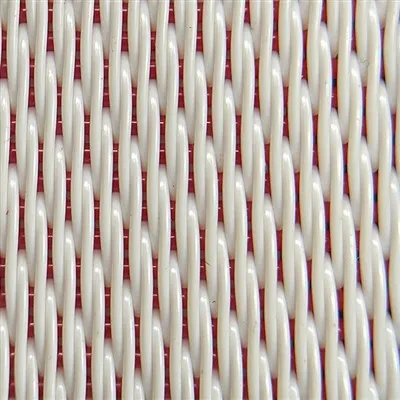


Benefits of Sludge Dewatering Mesh Belt
Sludge dewatering mesh belts are a critical component in the industrial wastewater treatment process. They offer numerous benefits that contribute to efficient sludge handling, reduced operational costs, and environmental compliance:
Efficient Dewatering
Mesh belts allow for continuous filtration and drainage of water from sludge. The porous nature of the belt facilitates the removal of free liquids, reducing the volume of sludge requiring further processing or disposal.
Consistent Operation
These belts are designed for continuous operation, providing a steady flow of dewatered sludge. This consistency helps in planning and managing the overall wastewater treatment process.
Reduced Disposal Costs
By significantly reducing the water content of the sludge, the weight and volume are lowered, which translates into reduced transportation and disposal costs.
Improved Treatment Efficiency
Lower sludge moisture content improves the efficiency of subsequent treatment processes, such as digestion or incineration, by increasing the organic loading rate and calorific value.
Space Efficiency
Mesh belt systems are typically more space-efficient than traditional dewatering equipment, allowing for more compact installations in industrial settings with limited space.
Customizable Design
Mesh belts can be tailored to fit specific process needs, including varying mesh sizes, pore shapes, and belt widths, ensuring optimal performance for different types of sludges.
Enhanced Environmental Compliance
Effective dewatering helps in meeting stricter environmental regulations regarding the disposal of sludge, as the reduced moisture content minimizes leachate formation in landfills.
Energy Efficiency
Compared to batch dewatering methods, continuous belt systems often require less energy, contributing to lower operational expenses and a smaller carbon footprint.
Minimal Maintenance
High-quality mesh belts are engineered for durability, withstanding abrasion and chemical corrosion, thus requiring less frequent maintenance and replacement.
Why Choose Us
Customer Service
We earn your respect by delivering on time and on budget. We built our reputation on exceptional customer service. Discover the difference it makes.
Competitive Pricing
We offer competitive pricing for our services without compromising on quality. Our prices are transparent, and we do not believe in hidden charges or fees.
One-Stop Service
We promise to provide you with the fastest reply, the best price, the best quality, and the most complete after-sales service.
Quality Assurance
We have a rigorous quality assurance process in place to ensure that all our services meet the highest standards of quality. Our team of quality analysts checks each project thoroughly before it is delivered to the client.
Customer Satisfaction
We are committed to delivering high quality services that exceed our clients' expectations. We strive to ensure that our clients are satisfied with our services and work closely with them to ensure their needs are met.
State-of-the-art Technology
We use the latest technology and tools to deliver high quality services. Our team is well-versed in the latest trends and advancements in technology and uses them to provide the best results.
The main purpose of using a sludge dewatering mesh belt is to remove excess water from sludge. By applying the sludge to the moving mesh belt, the weight and pressure of the sludge forces the water to be squeezed out through the mesh, reducing the moisture content of the sludge. This process makes the sludge more manageable and easier to handle, reducing its volume and weight for subsequent disposal or further processing.The dewatering process using a mesh belt helps to minimize the environmental impact of sludge handling by reducing the volume of waste and the associated transportation costs. Additionally, dewatered sludge is often more stable and less likely to leach harmful substances into the environment.The use of a sludge dewatering mesh belt can also improve the efficiency of subsequent processing steps, such as incineration or landfilling. Dewatered sludge requires less energy to dry , reducing overall operating costs.Overall, the purpose of using a sludge dewatering mesh belt is to achieve efficient moisture removal from sludge, making it more manageable, environmentally friendly, and cost-effective to handle.

How Does The Mesh Size Of The Sludge Dewatering Mesh Belt Affect The Dewatering Process
Water Removal
Smaller mesh sizes allow for finer filtration, trapping more water within the sludge and resulting in better dewatering efficiency.
Particle Retention
Larger mesh sizes might let through some smaller particles, affecting the solid content of the dewatered sludge.
Pressure Build-up
A tighter mesh can create more resistance, increasing the pressure on the sludge and forcing out more water.
What Are The Common Materials Used To Make Sludge Dewatering Mesh Belts
Polyester
Polyester mesh belts are known for their durability, resistance to abrasion, and chemical stability. They can handle a wide range of temperatures and have good strength.
Nylon
Nylon mesh belts have high strength and are resistant to abrasion and impact. They are suitable for applications involving heavy-duty loads and rough handling.
Stainless Steel
Stainless steel mesh belts are highly corrosion-resistant and can withstand high temperatures. They are often used in industries where hygiene and cleanliness are critical, such as food processing or pharmaceutical manufacturing.
Polypropylene
Polypropylene mesh belts offer excellent resistance to chemicals, UV radiation, and mildew. They have good flexibility and are suitable for applications involving exposure to harsh environments.
Can The Sludge Dewatering Mesh Belt Handle Different Types Of Sludge
The ability of a sludge dewatering mesh belt to handle different types of sludge depends on several factors. Generally, most mesh belts are designed to handle a variety of sludge types, but some may be more suitable for certain applications than others.Different types of sludge can have varying characteristics, such as viscosity, solid content, and particle size. The mesh belt's design and material should be able to accommodate these differences.For example, some mesh belts may be better suited for handling organic sludge, while others might be more suitable for inorganic or industrial sludge. The mesh size and opening of the belt can also play a role in determining its compatibility with different sludge types.It's important to consider the specific properties of the sludge and the requirements of the dewatering process when selecting a mesh belt.
How does the speed of the mesh belt affect the dewatering efficiency

Contact time
A slower speed allows for longer contact between the sludge and the mesh belt, giving more time for water to be squeezed out. This can result in better dewatering.

Pressure build-up
Faster speeds can create higher pressure on the sludge, forcing more water through the mesh. However, if the speed is too fast, it might not allow enough time for efficient water removal.

Solid retention
Slower speeds might help retain more solids within the dewatered sludge, while faster speeds could lead to a higher percentage of solid loss.
Operational considerations
Faster speeds may result in higher throughput, but it also puts more stress on the equipment and requires proper balance with other factors.
Are There Any Specific Maintenance Requirements For The Sludge Dewatering Mesh Belt
Yes, there are specific maintenance requirements for the sludge dewatering mesh belt, which are crucial for ensuring the longevity and efficient operation of the dewatering system. The maintenance requirements typically include the following:
Regular Inspection: It is important to inspect the mesh belt regularly for any signs of wear, damage, or deformation. This includes checking for tears, cuts, or broken wires.
Cleanliness: The mesh belt should be cleaned thoroughly after each use to remove residual sludge and prevent corrosion and accumulation of solids that could impair the belt's movement or integrity.
Tension Adjustment: Proper tension is essential for the smooth operation of the mesh belt. It should be checked and adjusted regularly to ensure that the belt remains taut and aligned correctly.
Belt Tracking: Ensure that the mesh belt tracks straight on the rollers. Misaligned belts can cause edge wear, snagging, and premature failure.
Roller Maintenance: The rollers that support and guide the mesh belt should be inspected for smooth operation and proper alignment. Bearings should be lubricated regularly, and any damaged rollers should be replaced.
Chemical Resistance: The mesh belt material should be compatible with the chemicals used in the dewatering process. If the belt is exposed to corrosive substances, it may need to be treated or replaced more frequently.
Storage: When the mesh belt is not in use, it should be stored properly to avoid deformation or damage. It should be rolled onto a storage reel and covered to protect it from dust, dirt, and other environmental factors.
Replacement Schedules: Establish a schedule for replacing the mesh belt based on usage, wear, and manufacturer recommendations. This will help prevent unexpected downtime due to belt failure.
Training: Operators and maintenance personnel should be trained on how to properly inspect, clean, maintain, and replace the mesh belt to ensure that it is done correctly and safely.
Documentation: Keeping accurate maintenance records is important for tracking the performance and lifespan of the mesh belt and for scheduling preventive maintenance tasks.
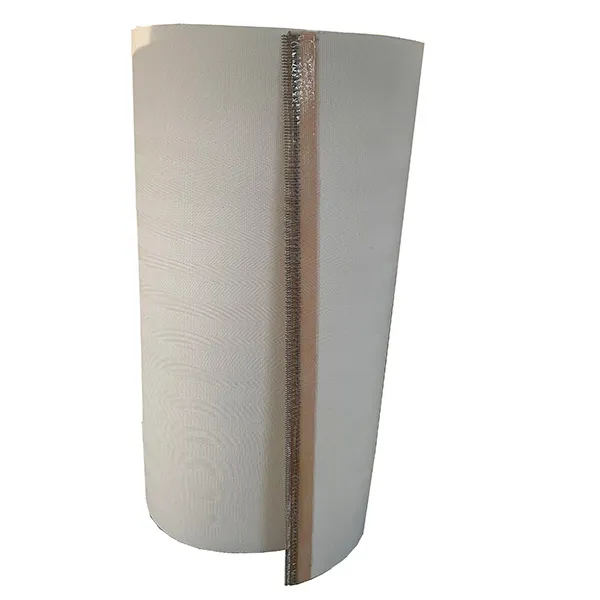
The corrosion resistance of a sludge dewatering mesh belt depends on the materials from which it is constructed. Common materials for these belts include polypropylene (PP), polyester (PES), polyamide (Nylon), and various combinations thereof, often with a reinforcing layer of polyester yarn or a core of polyester tape. These materials offer varying degrees of chemical resistance.
Polypropylene is known for its good chemical resistance to a wide range of acids, alkalis, and salts, making it suitable for many wastewater treatment applications. Polyester, on the other hand, generally provides moderate chemical resistance, which can be sufficient depending on the specific chemicals present in the sludge.
For environments where the sludge contains aggressive chemicals, it may be necessary to use a mesh belt with enhanced corrosion resistance, such as a belt with a higher proportion of reinforced materials or a coating designed to withstand those specific chemicals.
It is important to consult with the belt manufacturer to understand the chemical resistance properties of the mesh belt and select a material that is compatible with the specific conditions of the dewatering process, including the pH level, presence of organic solvents, temperature, and other chemical components in the sludge.
In summary, while sludge dewatering mesh belts are designed to have some degree of corrosion resistance, the suitability of a particular belt for a given application depends on the chemical composition of the sludge and the specific material properties of the belt.
What Are The Factors To Consider When Selecting A Sludge Dewatering Mesh Belt
Mesh size: The mesh size determines the particle retention and water removal capabilities of the belt. Smaller mesh sizes result in finer filtration and better water removal, but they also increase resistance and might slow down the process.
Material: The material of the mesh belt affects its durability, chemical resistance, temperature tolerance, and flexibility. Common materials include polyester, polypropylene, stainless steel, and nylon, each with its own advantages and limitations.
Durability: The mesh belt needs to withstand the wear and tear of continuous operation, as well as exposure to chemicals, heat, and abrasive materials. Look for belts with high tensile strength and resistance to cracking, fraying, and corrosion.
Compatibility: The mesh belt should be compatible with the type of sludge being processed and the dewatering equipment being used. Different types of sludge may require different materials or mesh sizes to achieve optimal results.
Cleaning And Maintenance: Consider the ease of cleaning and maintaining the mesh belt to ensure efficient operation and extended lifespan. Some belts may require more frequent cleaning or replacement than others.
Cost: The cost of the mesh belt is an important consideration, but it should not be the only factor. A cheaper belt may require more frequent replacement or result in lower efficiency, ultimately costing more in the long run.
Supplier Reputation: Choose a supplier with a good reputation for quality, reliability, and customer service. They should be able to provide technical support and guidance throughout the selection and installation process.
What are the common issues that can arise with the use of a mesh belt
Mesh belts, widely used in industrial processes like conveyance, heat treatment, and filtration, can encounter various issues during their use. These issues can affect performance and require attention to maintain productivity and safety. Some common problems include:
Wear and Tear
Regular friction and contact with materials can lead to wear on the mesh belt. This can result in holes, tears, or even complete failure of the belt.
Stretching
Over time and with continuous use, mesh belts can stretch, causing misalignment and potentially leading to off-tracking or snagging on rollers.
Corrosion
Exposure to corrosive elements, such as certain chemicals in the process or high humidity environments, can degrade the integrity of the belt material.
Clogging
In processes involving particulates or fibers, the mesh belt can become clogged, impeding movement and requiring cleaning or replacement.
Deformation
High temperatures can cause plastic deformation of the belt material, altering its shape and affecting functionality.
Snapping and Breaking
Mesh belts can break due to overloading, mechanical impact, or stress beyond their tensile strength.
Misalignment
Off-track or misaligned belts can cause jams, reduce throughput, and potentially damage equipment.
Bearing and Roller Issues
The bearings and rollers that support the mesh belt can fail due to lack of lubrication, contamination, or fatigue.
Material Adhesion
Certain process materials may adhere to the mesh, leading to contamination or reduced belt life.
Tension Imbalance
Uneven tension across the length of the belt can cause buckling or uneven movement.
The cost comparison between a mesh belt and other dewatering options depends on several factors, including the specific technology of the alternative dewatering method, the scale of operation, maintenance requirements, energy consumption, and the quality of the end product required.
Mesh belts are typically used in more advanced and automated dewatering systems, which can be more expensive upfront compared to simpler methods like gravity dewatering or deep beds. However, mesh belt systems can offer advantages in terms of reduced footprint, increased throughput, and better control over the dewatering process, which might justify the higher initial investment.
Gravity dewatering systems using deep beds, for instance, can be less expensive to install but may require larger areas and longer retention times to achieve similar levels of solids removal as a belt press. They also tend to produce a drier cake, but the process is slower and less efficient.
Centrifuge dewatering is another option that can be more costly than mesh belts initially but offers a very dry cake output. Centrifuges consume more energy and require specialized handling and maintenance, which can add to the operational costs.
Decanter centrifuges, for example, combine solid-liquid separation with a drying process, offering a compact unit but at a higher capital and operational cost compared to mesh belts.
Screw presses are a lower-cost option that can provide a balance between initial investment and operational efficiency, though they may not achieve the same level of dryness as mesh belts or centrifuges.
In conclusion, while mesh belts may have a higher initial cost, they can offer efficiencies in terms of space, energy, and processing speed that might make them a more economical choice in the long run, especially for large-scale operations where throughput and efficiency are critical. The best option depends on the specific requirements of the dewatering process, including desired cake dryness, throughput, available space, and budget constraints. It is advisable to perform a detailed cost-benefit analysis to determine the most cost-effective solution for a given application.
Can The Mesh Belt Be Reused After Proper Cleaning
Yes, in many cases, the mesh belt can be reused after proper cleaning. The cleaning process depends on the type of sludge, the conditions of the dewatering process, and the specific requirements of the application.Proper cleaning of the mesh belt helps remove any remaining sludge, debris, or contaminants that may have accumulated during the dewatering operation. This cleaning process can involve various methods such as冲洗, scrubbing, or using specialized cleaning agents.However, the reusability of the mesh belt also depends on its condition after cleaning. Over time, the mesh belt may experience wear and tear, stretching, or other forms of damage that could affect its performance and integrity.It's important to regularly inspect the mesh belt for signs of damage or wear. If any issues are identified, it may be necessary to repair or replace the belt to ensure optimal dewatering efficiency.Some mesh belts are designed to be more durable and resistant to wear, making them suitable for multiple uses. Others may have a limited lifespan and require more frequent replacement.To maximize the lifespan and reusability of the mesh belt, following the manufacturer's guidelines for cleaning and maintenance is recommended. This can include proper storage, handling, and periodic inspections.
Our Factory
The company is a professional paper mesh and industrial mesh manufacturing enterprises, with domestic and international world advanced level of paper mesh, industrial mesh complete sets of production equipment and technology. We has 3 sets of Swedish TEXO 12.5 meters loom, four warp beam heavy duty loom, Swedish TEXO warping machine, Norwegian 13.5 meters hot air sizing machine, Austrian automatic inserting and joining machine, American Nordson brushing and gluing machine, Swiss Lippo permeability tester and other advanced equipment and testing instruments. Our products are exported to many countries, such as Russia, France, Portugal, India, Pakistan, Iran, Turkey, Thailand, Indonesia and so on.


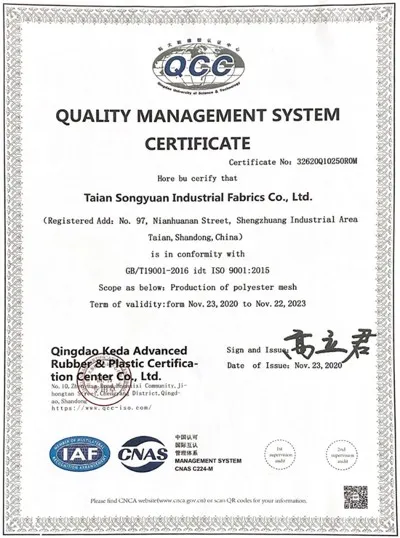
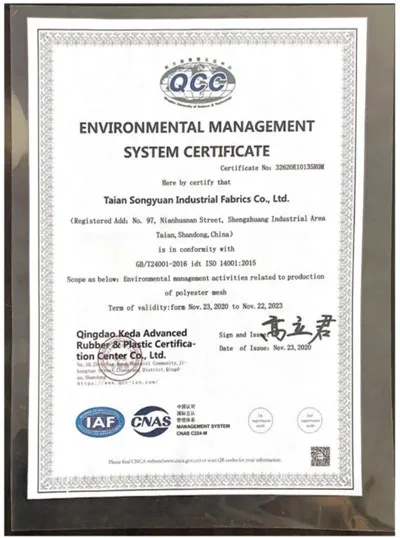
Our Certificate

FAQ
Q: What is a sludge dewatering mesh belt?
Q: How does a sludge dewatering mesh belt work?
Q: What materials are used to construct mesh belts?
Q: What are the different types of mesh patterns used?
Q: How is the mesh aperture size determined?
Q: What are the typical belt widths and lengths?
Q: Can mesh belts be customized?
Q: How often do mesh belts need to be replaced?
Q: What maintenance is required for mesh belts?
Q: What are the common causes of belt failure?
Q: How is the tension in a mesh belt adjusted?
Q: What are the advantages of using a mesh belt over other methods?
Q: What environmental considerations are there for sludge dewatering?
Q: Are there any health and safety concerns with mesh belts?
Q: How is energy consumption managed in sludge dewatering?
Q: How do mesh belts contribute to the sustainability of wastewater treatment?
Q: What are the challenges when scaling up sludge dewatering operations?
Q: How do you choose the right mesh belt for a particular application?
Q: What role does automation play in sludge dewatering with mesh belts?
Q: How does the selection of a mesh belt impact the overall cost of sludge dewatering?