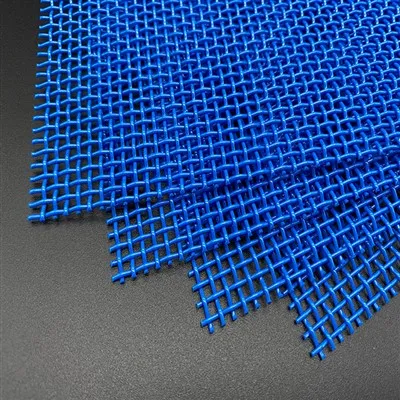
As a supplier of Polyester Plain Woven Mesh Belts, I've often been asked whether our product can be used in the woodworking industry. In this blog post, I'll explore the potential applications of Polyester Plain Woven Mesh Belts in woodworking, considering their properties, advantages, and limitations.
Properties of Polyester Plain Woven Mesh Belts
Polyester Plain Woven Mesh Belts are made from high - strength polyester monofilaments woven in a plain pattern. This construction gives them several notable properties. Firstly, they have excellent dimensional stability. The polyester material resists stretching and shrinking, even under varying temperature and humidity conditions. This is crucial in any industrial application where precise positioning and consistent performance are required.
Secondly, these mesh belts are highly resistant to abrasion. The smooth surface of the polyester monofilaments reduces friction, which not only extends the belt's lifespan but also minimizes wear on the materials it comes into contact with. Additionally, polyester has good chemical resistance, making the mesh belts suitable for use in environments where they may be exposed to certain chemicals or cleaning agents.
Potential Applications in the Woodworking Industry
Drying and Curing Processes
In the woodworking industry, drying and curing are essential steps. Wood products need to be dried to a specific moisture content to prevent warping, cracking, and fungal growth. Polyester Plain Woven Mesh Belts can be used in drying ovens or curing chambers. Their open - mesh structure allows for excellent air circulation, which speeds up the drying process. The hot air can pass through the mesh easily, reaching all parts of the wood products evenly. For example, when drying small wooden components like dowels or moldings, the mesh belt can carry them through the drying chamber efficiently.
Sanding and Finishing
Sanding is a common operation in woodworking to smooth the surface of wood products. Polyester Plain Woven Mesh Belts can be used as conveyor belts in sanding machines. The abrasion resistance of the belts ensures that they can withstand the friction generated during the sanding process. The open mesh design also allows the wood dust produced during sanding to fall through the belt, reducing the accumulation of dust on the belt surface and minimizing the risk of clogging. This helps to maintain a clean working environment and ensures the quality of the sanding operation.
Assembly and Handling
During the assembly process of wood products, Polyester Plain Woven Mesh Belts can be used to transport components from one workstation to another. Their smooth surface allows for easy movement of wooden parts, and the dimensional stability ensures accurate positioning of the components. For instance, in a furniture assembly line, the mesh belt can carry wooden panels, legs, and other parts to the assembly stations, improving the efficiency of the production process.
Advantages of Using Polyester Plain Woven Mesh Belts in Woodworking
Cost - effectiveness
Compared to some other types of conveyor belts, Polyester Plain Woven Mesh Belts are relatively inexpensive. They have a long service life due to their abrasion and chemical resistance, which reduces the need for frequent replacements. This results in lower overall costs for woodworking manufacturers in the long run.
Easy Maintenance
Maintaining Polyester Plain Woven Mesh Belts is straightforward. They can be easily cleaned with water and mild detergents, and their open - mesh structure allows for quick drying after cleaning. This ease of maintenance helps to keep the production line running smoothly without significant downtime for belt maintenance.
Customizability
We can customize Polyester Plain Woven Mesh Belts according to the specific requirements of woodworking manufacturers. We can adjust the mesh size, belt width, and length to fit different woodworking equipment and production processes. This flexibility makes the mesh belts suitable for a wide range of applications in the woodworking industry.
Limitations and Considerations
Load - bearing Capacity
While Polyester Plain Woven Mesh Belts have good strength, they may have limitations in terms of load - bearing capacity. For very heavy wood products or high - speed applications with large loads, the belts may need to be reinforced or a different type of conveyor belt may be more appropriate. Woodworking manufacturers should carefully assess the weight and size of the wood products they need to transport and choose the right belt accordingly.
Temperature Resistance
Although polyester has some degree of temperature resistance, extremely high temperatures can affect the performance of Polyester Plain Woven Mesh Belts. In some high - temperature drying or curing processes, the belts may need to be used in combination with cooling systems or other heat - resistant materials to prevent damage to the belts.


Related Products
If you are interested in other types of conveyor belts related to the woodworking industry or other industries, we also offer Monofilament Food Conveyor Belt, Paper Machine Plain Fabric, and Polyester Mesh Conveyor Belt. These products have their own unique properties and applications, and you can explore them further on our website.
Conclusion
Polyester Plain Woven Mesh Belts have significant potential in the woodworking industry. Their properties such as dimensional stability, abrasion resistance, and open - mesh structure make them suitable for various applications including drying, sanding, and assembly. While they have some limitations in terms of load - bearing capacity and temperature resistance, with proper selection and use, they can bring cost - effectiveness and efficiency to woodworking production processes.
If you are a woodworking manufacturer and are interested in using Polyester Plain Woven Mesh Belts in your production line, we invite you to contact us for more information and to discuss your specific requirements. We are committed to providing high - quality products and excellent customer service to meet your needs.
References
- "Industrial Conveyor Belt Handbook", Third Edition, edited by John A. McKee.
- "Wood Science and Technology" textbooks, which cover various wood processing techniques and related equipment.