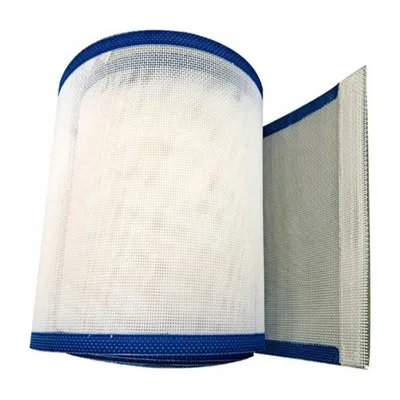
Polyester mesh conveyor belts are widely used in various industries due to their excellent properties such as high strength, good flexibility, and resistance to wear and corrosion. However, one question that often arises is whether these belts generate static electricity. In this blog post, as a supplier of polyester mesh conveyor belts, I will explore this topic in detail and provide you with a comprehensive understanding of static electricity generation in polyester mesh conveyor belts.
Understanding Static Electricity
Static electricity is an imbalance of electric charges within or on the surface of a material. It is typically generated when two materials come into contact and then separate, causing electrons to transfer from one material to the other. This results in one material becoming positively charged and the other negatively charged. Static electricity can cause a variety of problems, including attracting dust and debris, interfering with electronic equipment, and even causing sparks that can ignite flammable materials.
Factors Affecting Static Electricity Generation in Polyester Mesh Conveyor Belts
Several factors can influence whether polyester mesh conveyor belts generate static electricity. These factors include:
Material Properties
Polyester is a synthetic polymer that has a relatively high resistance to electrical conductivity. This means that it can easily accumulate static charges when in contact with other materials. The surface properties of the polyester mesh, such as its roughness and texture, can also affect static electricity generation. A smoother surface may reduce the friction between the belt and other materials, thereby reducing the likelihood of static charge buildup.
Operating Conditions
The operating conditions of the conveyor belt can also play a significant role in static electricity generation. For example, high speeds and low humidity levels can increase the likelihood of static charge buildup. When the belt moves at high speeds, the friction between the belt and the pulleys or other components can generate static electricity. Low humidity levels can also contribute to static charge buildup because dry air is a poor conductor of electricity, allowing charges to accumulate more easily.
Contact with Other Materials
The materials that the polyester mesh conveyor belt comes into contact with can also affect static electricity generation. For example, if the belt comes into contact with materials that have a different electrical conductivity, such as metals or plastics, static charges can be transferred between the materials. Additionally, the type of contact, such as sliding or rolling, can also influence static electricity generation.
Effects of Static Electricity on Polyester Mesh Conveyor Belts
Static electricity can have several negative effects on polyester mesh conveyor belts and the overall operation of the conveyor system. These effects include:
Dust and Debris Attraction
Static charges on the conveyor belt can attract dust and debris, which can accumulate on the belt surface and cause problems such as reduced belt performance, increased wear and tear, and contamination of the conveyed materials.
Electrical Interference
Static electricity can also interfere with electronic equipment in the vicinity of the conveyor system. This can cause malfunctions or errors in sensors, controllers, and other electronic components, leading to downtime and increased maintenance costs.
Fire and Explosion Hazards
In some industries, such as the chemical and pharmaceutical industries, static electricity can pose a significant fire and explosion hazard. Sparks generated by static charges can ignite flammable materials, such as solvents or powders, leading to serious accidents.
Preventing Static Electricity in Polyester Mesh Conveyor Belts
To prevent static electricity generation in polyester mesh conveyor belts, several measures can be taken. These measures include:
Using Anti-Static Treatments
Anti-static treatments can be applied to the surface of the polyester mesh conveyor belt to reduce its electrical resistance and prevent static charge buildup. These treatments typically involve the use of conductive materials or additives that can dissipate static charges.
Maintaining Proper Humidity Levels
Maintaining proper humidity levels in the operating environment can also help to prevent static electricity generation. Humid air is a better conductor of electricity than dry air, which can help to dissipate static charges more quickly. Humidifiers can be used to increase the humidity levels in the conveyor system area.
Grounding the Conveyor System
Grounding the conveyor system can also help to prevent static electricity buildup. By connecting the conveyor belt and other components to a ground source, static charges can be safely discharged into the ground.
Using Conductive Pulleys and Rollers
Using conductive pulleys and rollers can also help to prevent static electricity generation. Conductive materials can help to dissipate static charges as the belt moves over the pulleys and rollers.


Our Polyester Mesh Conveyor Belts
As a supplier of polyester mesh conveyor belts, we offer a wide range of products that are designed to meet the specific needs of our customers. Our Polyester Wire Mesh Belts are made from high-quality polyester materials and are available in various mesh sizes and configurations. These belts are suitable for a variety of applications, including food processing, packaging, and electronics manufacturing.
Our Polyester Mesh Fabric Conveyor Belt is another popular product that offers excellent flexibility and strength. This belt is ideal for applications that require a smooth and flat surface, such as conveying small parts or delicate materials.
We also offer Polyester Spiral Mesh Conveyor Belt, which is designed for applications that require high-speed conveying and tight turns. This belt is made from a continuous spiral of polyester mesh, which provides excellent flexibility and durability.
Contact Us for Procurement
If you are interested in purchasing polyester mesh conveyor belts or have any questions about static electricity prevention, please feel free to contact us. Our team of experts will be happy to assist you in selecting the right product for your application and providing you with the necessary technical support. We are committed to providing our customers with high-quality products and excellent customer service.
References
- "Electrostatics in the Workplace: A Guide to Static Electricity and Its Control." Health and Safety Executive, UK.
- "Polymer Science and Technology." Mark, James E., et al. (Eds.). Wiley-Interscience, 2004.
- "Conveyor Belt Technology." Singh, R. P. CRC Press, 2010.