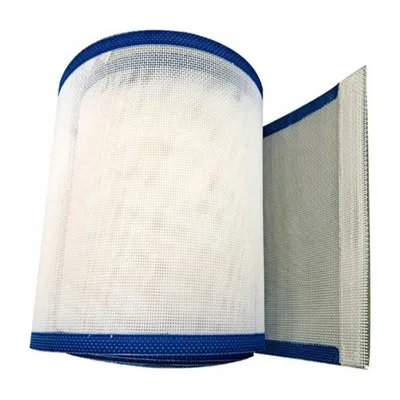
Hey there! As a supplier of Paper Machine Forming Wires, I've gotten a lot of questions about how these wires impact the opacity of paper. So, I thought I'd break it down for you in this blog post.
First off, let's talk about what paper machine forming wires are. They're basically the conveyor belts in a paper - making machine. They carry the pulp suspension, and as the water drains through the wires, the fibers start to bond together to form paper. These wires come in different types, like the Polyester Single Layer Forming Fabric, One And Half Layer Forming Wire, and Polyester Forming Screen Forming Fabric. Each type has its own unique characteristics that can affect the paper - making process and the final product.
Now, let's get into how these forming wires affect the opacity of paper. Opacity is super important in the paper industry. It's what makes the paper look less see - through, which is crucial for things like printing papers. You don't want the ink from one side of the page to show through to the other.
Wire Structure and Fiber Arrangement
The structure of the forming wire plays a huge role in how the fibers in the pulp are arranged. A wire with a tight mesh structure will cause the fibers to be more densely packed. When the fibers are packed closely together, they block more light from passing through the paper, which increases the opacity. For example, the Polyester Single Layer Forming Fabric has a relatively simple structure. If it has a fine mesh, it can help in getting a more uniform and dense fiber distribution. This means that more light is scattered and absorbed by the fibers, leading to higher opacity.
On the other hand, a wire with a looser structure might result in a more open fiber network. In this case, light can pass through the gaps between the fibers more easily, reducing the opacity. The One And Half Layer Forming Wire has a bit more complexity in its structure. Depending on how the layers are designed, it can either promote a dense fiber arrangement or a more open one. If the layers are arranged in a way that encourages good fiber entanglement and packing, it can boost the opacity.
Surface Smoothness of the Wire
The surface smoothness of the forming wire also affects the paper's opacity. A smooth wire surface allows the fibers to lie flat and form a more even layer on the wire. When the fibers are flat and well - aligned, they create a better barrier for light. For instance, the Polyester Forming Screen Forming Fabric can be engineered to have a very smooth surface. This smoothness helps in creating a paper with a more consistent surface, which in turn improves the opacity.


If the wire surface is rough, the fibers may be randomly oriented and clump together in some areas. This uneven fiber distribution can lead to areas where light can pass through more easily, reducing the overall opacity of the paper.
Drainage Rate
The drainage rate of the forming wire is another key factor. When the water drains too quickly from the pulp on the wire, the fibers may not have enough time to properly arrange themselves. This can result in a less - dense fiber mat and lower opacity. A wire that allows for a controlled and moderate drainage rate gives the fibers time to settle and bond in a way that maximizes opacity.
For example, some of our advanced forming wires are designed to have an optimized drainage rate. They strike the right balance between getting rid of the water quickly enough to keep the paper - making process efficient and allowing the fibers to form a dense and opaque layer.
Wear and Tear
Over time, forming wires can wear out. As they wear, their structure and surface properties change. A worn - out wire may have a looser mesh or a rougher surface. This can lead to a decrease in the paper's opacity. For example, if the wire's mesh becomes too loose due to wear, the fiber packing will be less dense, and light will pass through more easily.
That's why it's important to regularly inspect and replace forming wires. We offer high - quality forming wires that are designed to have a long service life, but even the best wires will eventually need to be replaced to maintain the desired paper opacity.
Impact on Different Paper Grades
The effect of forming wires on opacity can vary depending on the type of paper being made. For example, in the production of high - quality printing papers, a high level of opacity is essential. Our Polyester Single Layer Forming Fabric can be a great choice here. Its ability to promote a dense fiber arrangement can help achieve the high opacity required for sharp and clear printing.
For packaging papers, while opacity may not be as critical as in printing papers, it still plays a role. A forming wire that can improve opacity can also enhance the overall appearance and strength of the packaging paper. The One And Half Layer Forming Wire can be adjusted to meet the specific needs of packaging paper production, whether it's for a more opaque or a more lightweight product.
Choosing the Right Forming Wire for Opacity
When it comes to choosing the right forming wire to achieve the desired opacity, there are a few things to consider. First, think about the type of paper you're making. Different paper grades have different opacity requirements. Second, consider the wire's structure, surface smoothness, and drainage rate. You want a wire that can promote a dense fiber arrangement, a smooth paper surface, and a controlled drainage rate.
We offer a wide range of forming wires, including the Polyester Single Layer Forming Fabric, One And Half Layer Forming Wire, and Polyester Forming Screen Forming Fabric. Our team of experts can help you select the best wire for your specific needs.
If you're looking to improve the opacity of your paper or just want to learn more about our forming wires, don't hesitate to reach out. We're here to help you optimize your paper - making process and get the best results. Whether you're a small - scale paper producer or a large - scale industry player, we have the solutions for you. Contact us to start a discussion about your requirements and how our forming wires can make a difference in your paper production.
References
- "Handbook of Pulp and Paper Technology"
- "The Science of Paper Making"
- Industry research reports on paper machine forming wires and paper properties.