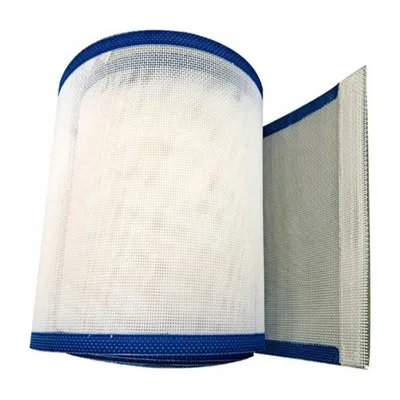
Hey there! As a supplier of Polyester Vacuum Filter Belts, I've seen firsthand how these nifty pieces of equipment play a crucial role in the food - processing industry. So, let's dive right in and talk about how a polyester vacuum filter belt performs in this field.
1. The Basics of Polyester Vacuum Filter Belts
First off, what exactly is a polyester vacuum filter belt? Well, it's a type of filter belt made from polyester material. Polyester is a synthetic polymer that's known for its strength, durability, and chemical resistance. These belts are designed to work with vacuum filters, which are used to separate solids from liquids in a slurry.
In the food - processing industry, there are all sorts of processes that involve separating solids and liquids. For example, when making fruit juices, you need to separate the pulp from the liquid. Or in the dairy industry, separating whey from curds. That's where our Vacuum Filter Belt Polyester comes in handy.
2. Performance in Filtration Efficiency
One of the most important aspects of any filter belt is its filtration efficiency. In the food - processing industry, this is crucial because you want to get the purest product possible. Polyester vacuum filter belts are great at this.
The polyester material has a tight weave that can trap even the smallest solid particles. This means that when you're filtering a food product, you can be sure that most of the unwanted solids will be removed. For instance, in beer brewing, the belt can effectively separate the spent grains from the wort, resulting in a clearer and better - tasting beer.
Moreover, these belts have a high flow rate. That means they can process a large volume of liquid in a relatively short amount of time. This is essential in large - scale food production where time is money. You don't want to be waiting around for hours just to filter a batch of juice or milk.
3. Durability and Long - Term Use
Food - processing environments can be tough. There are often high temperatures, harsh chemicals (like cleaning agents), and a lot of mechanical stress. But polyester vacuum filter belts are up to the challenge.
Polyester is a very durable material. It can withstand high temperatures without losing its shape or strength. This is important because many food - processing steps involve heating or cooling processes. For example, in the production of canned foods, the products are often sterilized at high temperatures. The filter belt needs to be able to handle these conditions without breaking down.
In addition, polyester is resistant to many chemicals commonly used in food processing and cleaning. This means that the belt can be cleaned regularly without being damaged. It can also resist the acids and alkalis that might be present in some food products. This durability ensures that the belt has a long service life, which in turn reduces the overall cost of production for food manufacturers.
4. Hygiene and Food Safety
Food safety is a top priority in the food - processing industry. Polyester vacuum filter belts are a great choice in this regard.
Polyester is a non - porous material, which means that it doesn't absorb liquids or harbor bacteria. This makes it easy to clean and sanitize. After each use, the belt can be thoroughly cleaned with appropriate cleaning agents to remove any food residues and bacteria. This helps to prevent cross - contamination between different batches of food products.
Also, the smooth surface of the polyester belt reduces the chances of food particles getting stuck. This further contributes to maintaining a high level of hygiene. In industries where strict food safety regulations are in place, such as the production of baby food or ready - to - eat meals, using a Polyester Filter Belt For Desulfurization (which also meets high - quality standards) can give food manufacturers peace of mind.
5. Adaptability to Different Food - Processing Applications
The food - processing industry is incredibly diverse, with different products requiring different filtration processes. Polyester vacuum filter belts are very adaptable.
They can be customized to meet the specific needs of different food products. For example, if you're filtering a thick, viscous liquid like honey, you might need a belt with a different pore size compared to when you're filtering a thin, watery fruit juice. Our team can work with food manufacturers to design and produce belts that are tailored to their exact requirements.
Whether it's in the meat - processing industry (separating fat from meat juices), the confectionery industry (filtering chocolate or sugar syrups), or the bakery industry (separating dough from excess water), polyester vacuum filter belts can be adjusted to perform optimally.
6. Cost - Effectiveness
When it comes to running a food - processing business, cost is always a major consideration. Polyester vacuum filter belts offer great cost - effectiveness.
As mentioned earlier, their durability means that they don't need to be replaced frequently. This reduces the cost of purchasing new belts. Additionally, their high filtration efficiency and flow rate mean that less energy is used in the filtration process. For example, less time is spent running the vacuum pumps, which saves on electricity costs.


In the long run, using a Polyester Desulfurization Mesh Belt or other polyester vacuum filter belts can result in significant cost savings for food manufacturers.
7. Conclusion and Call to Action
In conclusion, polyester vacuum filter belts are a fantastic choice for the food - processing industry. They offer high filtration efficiency, durability, hygiene, adaptability, and cost - effectiveness. If you're a food manufacturer looking to improve your filtration processes, we'd love to talk to you.
Whether you're just starting out or looking to upgrade your existing equipment, our team of experts can help you find the perfect polyester vacuum filter belt for your needs. Don't hesitate to reach out to us for more information or to start a procurement discussion. We're here to support you in making your food - processing operations more efficient and profitable.
References
- "Food Processing Technology: Principles and Practice" by P. Fellows
- "Filtration in the Food Industry" by various authors in industry - specific journals