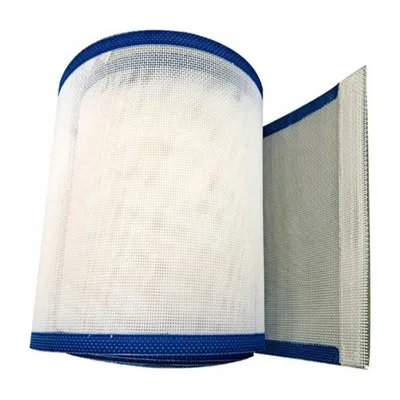
Humidity control is a crucial aspect of the drying process in a spiral dryer, especially when working in conjunction with a mesh belt. As a leading supplier of Spiral Dryer Mesh Belts, I have witnessed firsthand the intricate relationship between humidity and the performance of these systems. In this blog, I will delve into how humidity control in a spiral dryer operates with the mesh belt, exploring the science behind it and how our products play a vital role.
The Role of the Mesh Belt in the Drying Process
The mesh belt in a spiral dryer serves as a carrier for the material being dried. It transports the product through the dryer in a continuous and efficient manner. The design and properties of the mesh belt are essential for the overall drying effectiveness. The open structure of the mesh allows for air circulation around the material, facilitating the removal of moisture.
Our Spiral Dryer Mesh Belts are meticulously engineered to ensure optimal air permeability. This is key to enabling the hot air in the dryer to reach the material evenly, promoting uniform drying. Different materials can be used for the mesh belt, such as polyester, which offers excellent chemical resistance and durability. If you are interested in a Polyester Dryer Screen, we offer high - quality options that are designed to meet the specific requirements of various drying applications.
Understanding Humidity in the Drying Process
Humidity refers to the amount of water vapor present in the air. In a spiral dryer, controlling humidity is essential for achieving the desired drying rate and product quality. The drying process involves the transfer of moisture from the material to the surrounding air. When the air is dry, it has a greater capacity to absorb moisture from the product.
During the initial stages of the drying process, the material often contains a high amount of moisture. As hot air passes through the mesh belt and contacts the material, it picks up the moisture. The humidity of the air in the dryer increases as it becomes saturated with water vapor. If the humidity is not controlled, the drying rate will slow down, and the material may not reach the desired moisture content.
How Humidity Control Works in a Spiral Dryer with a Mesh Belt
Airflow Management
One of the primary methods of humidity control is through proper airflow management. The hot air is circulated through the spiral dryer in a carefully designed path. The mesh belt allows the air to flow through the material bed, facilitating the transfer of moisture. By adjusting the speed and direction of the airflow, the humidity can be regulated.
For example, a higher airflow rate can help remove the moist air more quickly, preventing it from remaining in contact with the material for too long. This helps maintain a lower humidity level in the immediate vicinity of the material, enhancing the drying process. Our mesh belts are designed to work seamlessly with the airflow systems in spiral dryers, ensuring efficient moisture removal.
Heating and Ventilation
Heating and ventilation play crucial roles in humidity control. The hot air in the dryer provides the energy required to evaporate the moisture from the material. By adjusting the temperature of the air, the rate of evaporation can be controlled. Higher temperatures generally lead to faster evaporation, but it is important to ensure that the product is not damaged by excessive heat.
Ventilation is also essential for removing the moist air from the dryer. By having a well - designed ventilation system, the humid air can be exhausted from the dryer, and fresh, dry air can be introduced. This continuous exchange of air helps maintain a low humidity environment inside the dryer. The mesh belt's design allows for efficient air movement through the system, promoting better ventilation and humidity control.
Humidity Sensors and Automation
Modern spiral dryers often incorporate humidity sensors and automation systems to precisely control the humidity. These sensors continuously monitor the humidity levels inside the dryer and provide real - time data. Based on this data, the dryer's control system can adjust various parameters, such as the airflow rate, temperature, and ventilation, to maintain the desired humidity level.
Our Spiral Dryer Mesh Belts are compatible with these advanced control systems. The reliable performance of our mesh belts ensures that the material is consistently exposed to the proper drying conditions, even as the humidity control parameters are adjusted.
The Importance of the Right Mesh Belt for Humidity Control
The choice of the mesh belt significantly impacts humidity control in a spiral dryer. A well - designed mesh belt allows for efficient air circulation, which is essential for moisture removal. The Polyester Drying Screen for Paper Making is an excellent example of a specialized mesh belt that is optimized for drying processes in the paper industry.
It has a specific pore size and structure that allows hot air to pass through while supporting the paper material evenly. This ensures that the humidity can be effectively controlled, resulting in high - quality dried paper products. Similarly, our Wove Dryer Fabrics are designed to offer excellent air permeability and mechanical strength, which are crucial for maintaining proper humidity control in a variety of drying applications.
Benefits of Effective Humidity Control in a Spiral Dryer with a Mesh Belt
Improved Product Quality
Effective humidity control ensures that the material is dried uniformly, preventing issues such as over - drying or under - drying. This results in a higher - quality final product. For example, in the food industry, proper humidity control during drying can preserve the nutritional value, flavor, and texture of the food products.
Energy Efficiency
By maintaining the optimal humidity level, the dryer can operate more efficiently. When the humidity is controlled, less energy is wasted in trying to remove excessive moisture or in drying the product for longer periods. This not only reduces energy costs but also contributes to a more sustainable drying process.
Increased Productivity
With consistent humidity control, the drying process can be optimized, leading to increased productivity. The material can be dried more quickly and with fewer interruptions, allowing for a higher throughput of the dryer.
Contact Us for Your Spiral Dryer Mesh Belt Needs
If you are in the market for a high - quality Spiral Dryer Mesh Belt, we are here to help. Our team of experts can assist you in choosing the right mesh belt for your specific drying application. We understand the importance of humidity control and how our products can contribute to the efficient operation of your spiral dryer. Whether you need a standard mesh belt or a customized solution, we have the expertise and resources to meet your requirements. Contact us today to start a conversation about your drying needs and discover how our products can enhance your drying process.


References
- Smith, J. (2018). Principles of Industrial Drying. London: Industrial Press.
- Brown, A. (2019). Advances in Mesh Belt Design for Drying Applications. Journal of Drying Technology, 37(2), 123 - 135.
- Green, C. (2020). Humidity Control in Industrial Dryers. New York: Academic Press.