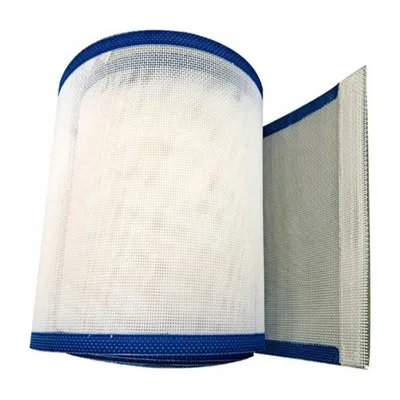
As a seasoned supplier of Vacuum Filter Belt Polyester, I've witnessed firsthand the remarkable evolution of this technology over the years. In this blog post, I'll delve into the future development trends of vacuum filter belt polyester technology, exploring the factors driving change and the potential opportunities that lie ahead.
Current State of Vacuum Filter Belt Polyester Technology
Before we look to the future, it's essential to understand the current state of vacuum filter belt polyester technology. Vacuum filter belts made from polyester are widely used in various industries, including mining, chemical processing, food and beverage, and wastewater treatment. These belts offer several advantages, such as high strength, excellent chemical resistance, and good filtration efficiency.
The manufacturing process of vacuum filter belt polyester has also advanced significantly. Modern production techniques allow for the creation of belts with precise pore sizes and uniform structures, ensuring consistent performance. Additionally, the development of new polyester materials and surface treatments has further enhanced the durability and functionality of these belts.
Key Drivers of Future Development
Several factors are expected to shape the future development of vacuum filter belt polyester technology.
1. Environmental Regulations
With increasing environmental concerns, industries are under pressure to reduce their environmental impact. Vacuum filter belts play a crucial role in separating solids from liquids, and more efficient and sustainable filtration solutions are in high demand. Future vacuum filter belt polyester technology is likely to focus on improving filtration efficiency to minimize waste and reduce energy consumption. For example, belts with enhanced pore structures that can capture finer particles more effectively will be highly sought after.
2. Technological Advancements
The rapid pace of technological innovation is another significant driver. New materials and manufacturing processes are constantly being developed, which can lead to the creation of vacuum filter belts with superior performance. For instance, the use of nanotechnology in polyester materials could result in belts with self - cleaning properties or enhanced chemical resistance. Additionally, advancements in automation and control systems can optimize the operation of vacuum filtration equipment, further improving the performance of the belts.
3. Industry - Specific Requirements
Different industries have unique requirements for vacuum filter belts. In the mining industry, for example, belts need to withstand high abrasion and harsh chemical environments. In the food and beverage industry, belts must meet strict hygiene standards. As industries continue to evolve, vacuum filter belt polyester technology will need to adapt to these specific needs. This may involve the development of specialized belts with unique surface properties or the ability to operate under extreme conditions.
Future Development Trends
1. Enhanced Filtration Efficiency
One of the most significant trends in the future of vacuum filter belt polyester technology is the continuous improvement of filtration efficiency. This can be achieved through several means. Firstly, the development of new polyester materials with optimized pore structures will allow for better separation of solids and liquids. These materials can be engineered to have a more uniform pore size distribution, which can improve the capture of fine particles and reduce the amount of solids passing through the belt.
Secondly, surface treatments can play a crucial role in enhancing filtration efficiency. For example, hydrophilic coatings can improve the wetting properties of the belt, allowing for better liquid flow and more efficient filtration. On the other hand, hydrophobic coatings can prevent the adhesion of certain substances to the belt surface, reducing fouling and improving the overall performance of the filtration system.
2. Sustainability
Sustainability is becoming an increasingly important factor in the development of vacuum filter belt polyester technology. As mentioned earlier, environmental regulations are driving the demand for more sustainable filtration solutions. In the future, we can expect to see the development of belts made from recycled polyester materials. These recycled belts not only reduce the environmental impact but also offer cost - effective alternatives to traditional belts.
Furthermore, the design of vacuum filter belts will focus on reducing energy consumption. For example, belts with lower friction coefficients can reduce the power required to operate the filtration equipment, resulting in energy savings. Additionally, the development of self - cleaning belts can reduce the need for frequent cleaning and maintenance, further improving the sustainability of the filtration process.
3. Customization
As industries have diverse requirements, customization will be a key trend in the future of vacuum filter belt polyester technology. Suppliers will need to offer a wide range of belt options to meet the specific needs of different customers. This may include belts with different widths, lengths, pore sizes, and surface properties.
For example, in the chemical processing industry, where different chemicals are used, belts with specific chemical resistance properties can be customized. In the wastewater treatment industry, belts can be designed to handle different types of wastewater, such as industrial wastewater with high levels of heavy metals or municipal wastewater with a high organic content.
4. Integration with Smart Technologies
The integration of vacuum filter belt polyester technology with smart technologies is another exciting trend. With the advent of the Internet of Things (IoT) and Industry 4.0, vacuum filtration systems can be equipped with sensors and monitoring devices to collect real - time data on the performance of the belts. This data can be used to optimize the operation of the filtration system, predict maintenance needs, and improve overall efficiency.
For example, sensors can monitor the pressure drop across the belt, the flow rate of the filtrate, and the temperature of the system. By analyzing this data, operators can detect early signs of belt wear or fouling and take proactive measures to prevent system failures. Additionally, smart control systems can automatically adjust the operating parameters of the filtration equipment based on the real - time data, ensuring optimal performance at all times.
The Role of Our Company as a Supplier
As a Vacuum Filter Belt Polyester supplier, we are committed to staying at the forefront of these future development trends. We invest heavily in research and development to ensure that our products meet the evolving needs of our customers. Our team of experts is constantly exploring new materials and manufacturing processes to develop innovative vacuum filter belts with enhanced performance.
We also understand the importance of customization. We work closely with our customers to understand their specific requirements and provide tailored solutions. Whether it's a specialized Polyester Desulfurization Mesh Belt for the power generation industry or a belt with unique surface properties for the pharmaceutical industry, we have the expertise and capabilities to deliver high - quality products.
In addition, we are actively involved in promoting sustainability in our products. We are researching and developing belts made from recycled polyester materials and exploring ways to reduce the energy consumption of our filtration systems. By doing so, we not only contribute to a more sustainable future but also help our customers meet their environmental goals.


Conclusion
The future of vacuum filter belt polyester technology is full of exciting possibilities. Driven by environmental regulations, technological advancements, and industry - specific requirements, we can expect to see significant developments in filtration efficiency, sustainability, customization, and the integration of smart technologies.
As a supplier, we are well - positioned to embrace these trends and provide our customers with the best possible products and solutions. If you are in need of high - quality vacuum filter belts or have specific requirements for your industry, we encourage you to [contact us](contact information placeholder) for a detailed discussion. We look forward to working with you to meet your filtration needs and contribute to the success of your business.
References
- Smith, J. (2020). Advances in Filtration Technology. Journal of Industrial Filtration, 15(2), 45 - 52.
- Johnson, A. (2021). The Impact of Environmental Regulations on Filtration Equipment. Environmental Science and Technology Review, 22(3), 78 - 85.
- Brown, C. (2019). Future Trends in Polyester Materials for Filtration Applications. Polymer Science Journal, 30(4), 112 - 120.