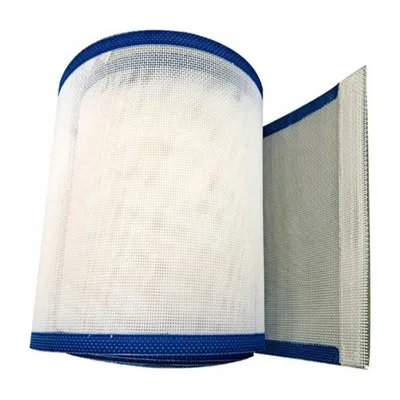
In the industrial filtration landscape, anti-static filter fabrics play a crucial role, especially in environments where static electricity can pose significant risks such as fire, explosion, or product contamination. As a leading supplier of anti-static filter fabric, I am often asked about the thickness of these common materials. Understanding the thickness is not only essential for product selection but also for ensuring optimal performance in various applications.
Factors Influencing the Thickness of Anti - Static Filter Fabric
The thickness of anti - static filter fabric is determined by a multitude of factors. First and foremost is the intended application. Different industries have diverse requirements for filtration, and the thickness of the fabric must be tailored accordingly. For instance, in the chemical industry, where there is a high risk of static discharge due to the presence of flammable substances, a thicker anti - static filter fabric may be necessary to provide better protection and filtration efficiency.
Material composition also has a profound impact on fabric thickness. Most anti - static filter fabrics are made from synthetic materials such as polyester, which is known for its durability and resistance to chemicals. Polyester fibers can be woven or non - woven to create different fabric structures, each with its own characteristic thickness. Woven fabrics, for example, are typically more structured and may have a greater thickness compared to non - woven fabrics, which are often lighter and more flexible.
The level of anti - static protection required is another critical factor. Anti - static properties are usually achieved through the incorporation of conductive fibers or treatments. Fabrics with a higher concentration of conductive elements may be thicker to accommodate these additional components while still maintaining the necessary mechanical strength and filtration performance.
Common Thickness Ranges of Anti - Static Filter Fabric
When it comes to common anti - static filter fabrics, the thickness can vary widely depending on the specific product and its application. Generally, the thickness of these fabrics ranges from 0.1 mm to 5 mm.
Thinner fabrics, in the range of 0.1 mm to 1 mm, are often used in applications where lightweight and high - air permeability are required. These fabrics are commonly found in air filtration systems, such as those used in HVAC (Heating, Ventilation, and Air Conditioning) units. They can effectively capture dust and other particulate matter while allowing air to pass through with minimal resistance. For example, a thin anti - static filter fabric with a thickness of around 0.2 mm can be used in a cleanroom environment to prevent static - induced particle attraction and ensure a high level of air cleanliness.
Fabrics with a thickness between 1 mm and 3 mm are more versatile and can be used in a variety of applications, including liquid filtration and industrial dust collection. These fabrics offer a good balance between filtration efficiency and mechanical strength. In liquid filtration, a 2 - mm thick anti - static filter fabric can effectively remove impurities from a wide range of liquids, such as oil, water, and chemical solutions. The thickness provides sufficient structural integrity to withstand the pressure and flow of the liquid without tearing or collapsing.
Thicker fabrics, ranging from 3 mm to 5 mm, are typically used in heavy - duty applications where high - pressure filtration or extreme durability is required. For example, in the mining industry, a thick anti - static filter fabric may be used in filter presses to separate solids from liquids in the extraction process. The fabric needs to be thick enough to withstand the high pressure exerted by the filter press and to prevent the passage of large particles.
Product Examples and Their Thickness
As a supplier, we offer a wide range of anti - static filter fabrics to meet the diverse needs of our customers. One of our popular products is the Polyester Anti - Static Filter Press Fabric. This fabric is made from high - quality polyester fibers with conductive elements incorporated to provide excellent anti - static properties. The thickness of this fabric typically ranges from 1.5 mm to 3 mm, making it suitable for a variety of filter press applications in industries such as chemical processing, food and beverage, and wastewater treatment.
Another product is the Anti - static Mash Belt. This belt is designed for use in conveyor systems where static electricity can cause product damage or operational issues. The anti - static mash belt has a thickness of around 1 mm, which provides sufficient flexibility for smooth operation while still offering effective anti - static protection.
Our Polyester Antistatic Filter Press Cloth is also a well - known product. It is made from a special blend of polyester fibers and conductive materials to ensure reliable anti - static performance. The thickness of this cloth can vary from 2 mm to 4 mm, depending on the specific requirements of the filter press and the type of material being filtered.
Importance of Choosing the Right Thickness
Selecting the appropriate thickness of anti - static filter fabric is crucial for achieving optimal filtration performance and ensuring the safety of the working environment. If the fabric is too thin, it may not provide adequate filtration efficiency or mechanical strength, leading to premature failure and potential safety hazards. On the other hand, if the fabric is too thick, it may reduce air or liquid permeability, increase energy consumption, and result in higher operating costs.
For example, in an air filtration system, using a fabric that is too thick can restrict the airflow, causing the HVAC unit to work harder and consume more energy. This not only increases the operating cost but also reduces the lifespan of the equipment. In a liquid filtration application, a fabric that is too thick may cause excessive pressure drop, leading to reduced flow rates and potential damage to the filtration system.


Conclusion
In conclusion, the thickness of common anti - static filter fabric is a critical parameter that is influenced by various factors such as application, material composition, and anti - static requirements. The thickness can range from 0.1 mm to 5 mm, with each range suitable for different types of applications. As a supplier of anti - static filter fabrics, we are committed to providing our customers with high - quality products that meet their specific needs. Whether you are looking for a thin fabric for air filtration or a thick fabric for heavy - duty filter press applications, we have the right solution for you.
If you are interested in our anti - static filter fabrics or have any questions about product selection, please feel free to contact us. Our team of experts is ready to assist you in finding the best product for your application and guiding you through the procurement process.
References
- "Handbook of Industrial Filtration", John Wiley & Sons, Inc.
- "Textile Science and Technology: Fibre Science", Elsevier Science Publishing Co., Inc.