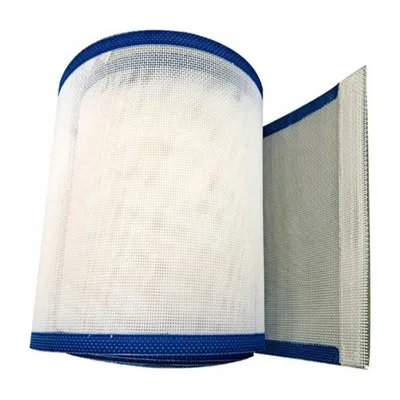
Hey there! As a supplier of Polyester Mesh Conveyor Belts, I often get asked about the weight per unit area of these belts. It's a crucial factor that can impact the performance and suitability of the belt for different applications. In this blog, I'll break down what determines the weight of a polyester mesh conveyor belt per unit area and why it matters.
What Influences the Weight per Unit Area?
First off, let's talk about what makes the weight of a polyester mesh conveyor belt vary. The main factors include the type of polyester used, the mesh design, and the thickness of the belt.
Type of Polyester
There are different grades of polyester, and each has its own density. High - quality polyesters might be denser, which means they'll contribute more to the belt's weight. For example, industrial - grade polyester is often more robust and has a higher density compared to consumer - grade polyester. This is because industrial applications require belts that can withstand heavy loads and harsh conditions.
Mesh Design
The way the mesh is woven plays a huge role in the weight. A tightly woven mesh will generally be heavier than a loosely woven one. Tight weaves use more material per unit area, increasing the overall weight. On the other hand, a more open - weave design will be lighter as there's less material in the same area. For instance, a Linear Screen Cloths with a fine, tight mesh will weigh more than a belt with a large - hole, open - weave pattern.
Thickness
The thickness of the belt is another obvious factor. Thicker belts have more material, so they're heavier. A thick polyester mesh conveyor belt might be used in applications where extra strength is needed, like in heavy - duty manufacturing or mining. Thinner belts, on the other hand, are lighter and might be suitable for more delicate operations.
Why Does the Weight per Unit Area Matter?
The weight per unit area of a polyester mesh conveyor belt can have several implications for its use.
Load - Bearing Capacity
Heavier belts generally have a higher load - bearing capacity. If you're moving heavy items on a conveyor, a belt with a higher weight per unit area can handle the load better. For example, in a steel manufacturing plant where large, heavy steel bars are being transported, a thick, heavy polyester mesh conveyor belt would be more appropriate.
Energy Consumption
Lighter belts require less energy to move. If you're running a conveyor system for long periods, using a lighter belt can save on energy costs. This is especially important in industries where energy efficiency is a top priority.
Flexibility
Lighter belts are often more flexible. This can be an advantage in applications where the conveyor needs to bend or turn. For instance, in a food processing plant where the conveyor needs to navigate around different processing stations, a lighter, more flexible belt can be a better choice.
Measuring the Weight per Unit Area
To measure the weight per unit area of a polyester mesh conveyor belt, we usually use grams per square meter (g/m²). This is a standard unit that makes it easy to compare different belts.
Here's a simple way to measure it. First, cut a sample of the belt with a known area. Then, weigh the sample on a precise scale. Divide the weight of the sample by its area, and you'll get the weight per unit area in g/m².
Different Types of Polyester Mesh Conveyor Belts and Their Weights
Let's take a look at some common types of polyester mesh conveyor belts and their typical weights.
Polyester Spiral Mesh Conveyor Belt
These belts are known for their flexibility and durability. The weight per unit area can vary depending on the spiral design and the thickness of the polyester. Generally, they can range from 200 g/m² for lighter, more flexible belts to 800 g/m² for heavier, more robust ones.
Polyester Conveyor Plain Fabric Belt
Plain fabric belts are often used in simple conveyor applications. Their weight per unit area usually falls between 300 g/m² and 600 g/m². The exact weight depends on the tightness of the weave and the thickness of the fabric.
Choosing the Right Belt Based on Weight per Unit Area
When choosing a polyester mesh conveyor belt, you need to consider the specific requirements of your application.
If you need a belt for light - duty applications, like moving small, lightweight items in a packaging line, a lighter belt with a lower weight per unit area would be sufficient. It'll be more energy - efficient and easier to handle.
For heavy - duty applications, such as moving large, heavy objects in a construction or mining environment, a heavier belt with a higher weight per unit area is necessary. It'll be able to withstand the heavy loads and the wear and tear.
Conclusion
In conclusion, the weight per unit area of a polyester mesh conveyor belt is an important factor that can affect its performance, load - bearing capacity, energy consumption, and flexibility. By understanding what influences the weight and how it impacts different applications, you can make an informed decision when choosing the right belt for your needs.
If you're in the market for a polyester mesh conveyor belt and want to discuss the best options based on your specific requirements, feel free to reach out. We're here to help you find the perfect belt for your operation.


References
- Textbooks on conveyor belt technology
- Industry reports on polyester mesh conveyor belts