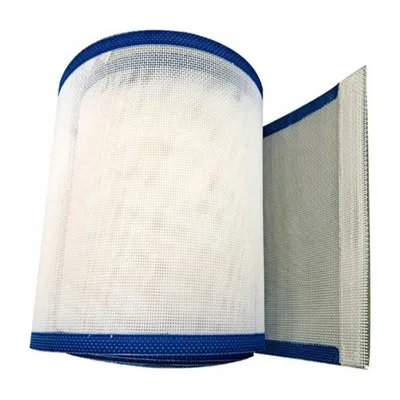
Polyester wire mesh belts are versatile and widely used in various industries, including food processing, packaging, and material handling. As a supplier of Polyester Wire Mesh Belts, I am often asked about the materials used to make these belts. In this blog post, I will explore the key materials that go into the production of polyester wire mesh belts, their properties, and how they contribute to the performance of the belts.
Polyester Fiber
The primary material used in polyester wire mesh belts is polyester fiber. Polyester is a synthetic polymer made from petrochemicals, which offers several advantages for use in wire mesh belts.
Properties of Polyester Fiber
- High Tensile Strength: Polyester fibers have excellent tensile strength, which means they can withstand high levels of stress without breaking. This property is crucial for wire mesh belts, as they need to support heavy loads and endure continuous use.
- Chemical Resistance: Polyester is resistant to many chemicals, including acids, alkalis, and solvents. This makes polyester wire mesh belts suitable for use in environments where they may come into contact with corrosive substances.
- Low Moisture Absorption: Polyester fibers have low moisture absorption, which helps to prevent the growth of mold and mildew. This is particularly important in applications where the belts are exposed to moisture or humidity.
- Dimensional Stability: Polyester fibers have good dimensional stability, which means they maintain their shape and size even under varying temperature and humidity conditions. This property ensures that the wire mesh belts remain flat and stable during operation.
Types of Polyester Fiber
There are different types of polyester fibers used in the production of wire mesh belts, including:
- PET (Polyethylene Terephthalate): PET is the most commonly used polyester fiber in wire mesh belts. It is known for its high strength, chemical resistance, and dimensional stability.
- PBT (Polybutylene Terephthalate): PBT is another type of polyester fiber that offers similar properties to PET but has a higher melting point. This makes it suitable for applications where the belts are exposed to high temperatures.
Stainless Steel Wire
In addition to polyester fiber, stainless steel wire is often used in the production of polyester wire mesh belts. Stainless steel wire provides additional strength and durability to the belts, especially in applications where they are subjected to high levels of wear and tear.
Properties of Stainless Steel Wire
- High Strength: Stainless steel wire has high tensile strength, which makes it suitable for use in wire mesh belts that need to support heavy loads.
- Corrosion Resistance: Stainless steel is resistant to corrosion, which helps to prevent the wire mesh belts from rusting and deteriorating over time.
- Heat Resistance: Stainless steel wire can withstand high temperatures without losing its strength or shape. This makes it suitable for use in applications where the belts are exposed to heat.
Types of Stainless Steel Wire
There are different types of stainless steel wire used in the production of wire mesh belts, including:
- 304 Stainless Steel: 304 stainless steel is the most commonly used type of stainless steel wire in wire mesh belts. It is known for its good corrosion resistance and high strength.
- 316 Stainless Steel: 316 stainless steel is a higher-grade stainless steel that offers better corrosion resistance than 304 stainless steel. It is often used in applications where the belts are exposed to harsh chemicals or environments.
Other Materials
In addition to polyester fiber and stainless steel wire, other materials may be used in the production of polyester wire mesh belts, depending on the specific application requirements. These materials may include:
- Nylon: Nylon is a synthetic polymer that offers high strength and abrasion resistance. It is often used in applications where the belts are subjected to high levels of wear and tear.
- PVC (Polyvinyl Chloride): PVC is a synthetic polymer that offers good chemical resistance and flexibility. It is often used in applications where the belts need to be resistant to chemicals or where they need to be flexible.
- Rubber: Rubber is a natural or synthetic material that offers good elasticity and shock absorption. It is often used in applications where the belts need to be flexible or where they need to absorb shock.
Conclusion
Polyester wire mesh belts are made from a combination of polyester fiber, stainless steel wire, and other materials, depending on the specific application requirements. These materials offer a range of properties, including high tensile strength, chemical resistance, low moisture absorption, dimensional stability, and heat resistance. By understanding the materials used in the production of polyester wire mesh belts, you can choose the right belt for your application and ensure its optimal performance.


If you are interested in purchasing Polyester Wire Mesh Belts, Woven Wire Dry Polyester Mesh Filter Belt, or Polyester Linear Screen Mesh Conveyor Belt, please contact us to discuss your specific requirements. We are a leading supplier of polyester wire mesh belts and can provide you with high-quality products at competitive prices.
References
- "Polyester Fibers: Properties and Applications." Encyclopedia of Polymer Science and Technology. John Wiley & Sons, Inc., 2003.
- "Stainless Steel: Properties and Applications." Metals Handbook Desk Edition. ASM International, 1998.
- "Nylon: Properties and Applications." Encyclopedia of Polymer Science and Technology. John Wiley & Sons, Inc., 2003.
- "PVC: Properties and Applications." Encyclopedia of Polymer Science and Technology. John Wiley & Sons, Inc., 2003.
- "Rubber: Properties and Applications." Encyclopedia of Polymer Science and Technology. John Wiley & Sons, Inc., 2003.