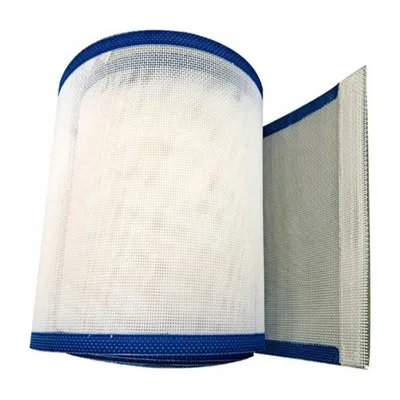
As a trusted supplier of Two And Half Layer Forming Wire, I understand the critical role this product plays in the papermaking industry. The strength of the Two And Half Layer Forming Wire is not only crucial for its durability but also significantly impacts the quality and efficiency of the papermaking process. In this blog, I will share some effective strategies to improve the strength of this essential product.
1. Material Selection
The first and most fundamental step in enhancing the strength of Two And Half Layer Forming Wire is choosing high - quality materials. For the base layer, we often use polyester monofilament. Polyester has excellent mechanical properties, such as high tensile strength, good abrasion resistance, and low elongation under load. When sourcing polyester monofilaments, it is important to select those with a consistent diameter and high - quality surface finish.
For the intermediate layer and the top layer, considering materials that can complement the base polyester layer is vital. Blending certain synthetic fibers with particular bonding characteristics can increase the overall cohesive strength of the wire. For example, some advanced forming wires incorporate specialty polymers in these layers. These polymers can form strong intermolecular bonds with the polyester monofilament, enhancing the overall strength and stability of the structure.
2. Structural Design Optimization
The structural design of the Two And Half Layer Forming Wire has a direct impact on its strength. One of the key design aspects is the weaving pattern. Different weaving patterns distribute stress in different ways across the wire. For instance, a well - designed twill weave can provide better stability and strength compared to a simple plain weave.
In a twill weave, the continuous interlacing of yarns creates a diagonal pattern that allows for more efficient load transfer. This means that when the wire is under tension during the papermaking process, the stress is evenly spread across the structure, reducing the risk of localized failure.
Another important design factor is the layer thickness ratio. Finding the optimal ratio between the base layer, the intermediate layer, and the top layer can significantly improve the overall strength of the wire. A thicker base layer can provide a strong foundation, while the intermediate layer can act as a buffer and enhance the bonding between the base and the top layer. The top layer, on the other hand, needs to have enough thickness to ensure good paper - forming performance without sacrificing the overall strength of the wire.
3. Manufacturing Process Control
The manufacturing process is where the design and material choices are transformed into a strong Two And Half Layer Forming Wire. Precision control at every step is essential.
In the extrusion process of the polyester monofilament, accurate temperature and pressure control are necessary to ensure the uniformity of the monofilament's properties. Any variation in temperature or pressure can lead to differences in the molecular structure of the polyester, which in turn affects the strength of the final product.
During the weaving process, maintaining the correct tension of the yarns is crucial. If the tension is too high, it can cause the yarns to break or become over - stretched, reducing the strength of the woven wire. Conversely, if the tension is too low, the wire may have a loose structure, which is also prone to failure.
After weaving, post - treatment processes such as heat setting can further enhance the strength of the wire. Heat setting helps to stabilize the molecular structure of the polyester fibers, reducing shrinkage and improving the dimensional stability of the wire. This, in turn, enhances the overall strength and durability of the Two And Half Layer Forming Wire.
4. Surface Treatment
Surface treatment is an effective way to improve the strength of Two And Half Layer Forming Wire. One common surface treatment is the application of a special coating. This coating can have several functions that contribute to the overall strength of the wire.
Firstly, a wear - resistant coating can protect the wire from abrasion caused by contact with the paper machine's rolls and other components. By reducing abrasion, the coating extends the service life of the wire and maintains its strength. Secondly, a coating with anti - static properties can prevent the accumulation of static electricity on the wire surface. Static electricity can cause the wire to attract dust and debris, which may lead to blockages and premature wear. By eliminating static, the coating helps to keep the wire in good condition and preserve its strength.
5. Quality Control and Testing
Quality control and regular testing are essential to ensure that the Two And Half Layer Forming Wire meets the required strength standards. During the manufacturing process, in - process inspections should be carried out at various stages to detect any potential defects early.
Testing methods can include tensile strength testing, abrasion resistance testing, and dimensional stability testing. Tensile strength testing measures the maximum amount of stress the wire can withstand before breaking. Abrasion resistance testing evaluates the wire's ability to resist wear when in contact with other surfaces. Dimensional stability testing checks whether the wire maintains its shape and size under different operating conditions.
By regularly monitoring the results of these tests, we can identify any issues with the wire's strength and take corrective actions in a timely manner. This may involve adjusting the manufacturing process, changing the material suppliers, or modifying the surface treatment.
Applications and Related Products
Our strong Two And Half Layer Forming Wire has a wide range of applications in the papermaking industry. It is suitable for various types of paper machines, from small - scale mills to large - scale industrial production lines.


If you are interested in other types of forming wires, we also offer Polyester Paper Machine Forming Wire, which features excellent drainage properties and high strength. Our Making Polyester SSB Triple Layer Forming Fabric is another high - quality product, designed for more demanding papermaking processes. For those looking for a different layer structure, our 1.5 Layer Forming Fabric provides a cost - effective solution without sacrificing performance.
Conclusion
Improving the strength of Two And Half Layer Forming Wire requires a comprehensive approach that includes material selection, structural design optimization, manufacturing process control, surface treatment, and quality control. By implementing these strategies, we can produce a high - strength forming wire that meets the strict requirements of the papermaking industry.
If you are in the market for high - quality Two And Half Layer Forming Wire or other related products, I encourage you to contact us for a detailed discussion about your specific needs. We are committed to providing you with the best solutions and excellent customer service.
References
- "Papermaking Technology and Science"
- "Man - Made Fibers: Their Chemistry and Technology"
- Industry reports on papermaking forming fabrics