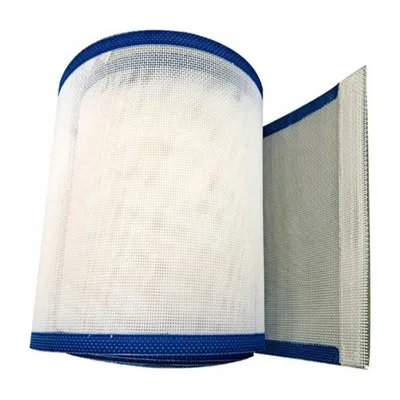
When it comes to industrial operations, a reliable conveyor belt is crucial. As a supplier of Polyester Mesh Conveyor Belts, I've seen firsthand how these belts play a vital role in various industries. But what exactly are the standards for the quality of a polyester mesh conveyor belt? Let's dive in and find out.
Material Quality
The first and most fundamental aspect is the quality of the polyester material itself. High - quality polyester used in conveyor belts should have excellent chemical resistance. This means it can withstand exposure to various chemicals without degrading or losing its structural integrity. For example, in food processing industries, the belt may come into contact with cleaning agents, acids, or alkalis. A good polyester mesh conveyor belt should be able to resist these substances to ensure a long service life.
The strength of the polyester fibers is also key. Strong fibers can handle heavy loads without breaking or stretching excessively. This is especially important in industries where large quantities of products are being transported continuously. A belt made from low - quality fibers may break under stress, leading to costly downtime and production losses.
Mesh Structure
The mesh structure of the conveyor belt is another important factor. The size and shape of the mesh openings can vary depending on the application. For instance, in industries where small particles need to be filtered or drained, a belt with smaller mesh openings is required. On the other hand, if the belt is used for transporting large items, a larger mesh may be more appropriate.
The uniformity of the mesh is also crucial. A non - uniform mesh can cause uneven distribution of the load on the belt, which may lead to premature wear and tear. A high - quality polyester mesh conveyor belt should have a consistent mesh pattern throughout its surface.
Weaving Technique
The way the polyester mesh is woven greatly affects the belt's quality. There are different weaving techniques available, such as plain weaving, twill weaving, and satin weaving. Plain weaving is the most common and is known for its simplicity and durability. It provides a stable structure that can handle moderate loads.
Twill weaving offers more flexibility and is often used in applications where the belt needs to bend around pulleys easily. Satin weaving, on the other hand, provides a smoother surface, which can be beneficial in industries where a clean and smooth transport surface is required, like in the electronics industry.
Surface Finish
The surface finish of the conveyor belt can impact its performance. A smooth surface finish can reduce friction between the belt and the products being transported, which is important for minimizing damage to the products. It also makes the belt easier to clean, which is crucial in industries with strict hygiene standards, such as the food and pharmaceutical industries.
Some belts may have a special coating on the surface to enhance their properties. For example, a non - stick coating can prevent products from sticking to the belt, making the transport process more efficient.
Tensile Strength
Tensile strength refers to the maximum amount of stress a belt can withstand before breaking. A high - quality polyester mesh conveyor belt should have a sufficient tensile strength to handle the expected load. This strength is determined by the quality of the polyester fibers, the weaving technique, and the overall design of the belt.
In industries where heavy loads are being transported over long distances, a belt with high tensile strength is essential. It ensures that the belt can operate reliably without breaking or stretching beyond its limits.
Resistance to Wear and Tear
Conveyor belts are constantly in motion and are subject to friction from the products being transported, as well as from the pulleys and rollers. A good quality polyester mesh conveyor belt should have excellent resistance to wear and tear. This can be achieved through the use of high - quality materials and proper surface treatments.


For example, belts that are used in abrasive environments may be treated with a special wear - resistant coating. This coating can extend the belt's lifespan and reduce the need for frequent replacements.
Joint Quality
The joints of the conveyor belt are often the weakest points. A high - quality joint is essential for the overall performance of the belt. There are different types of joints available, such as mechanical joints and vulcanized joints.
Mechanical joints are quick and easy to install but may not be as strong as vulcanized joints. Vulcanized joints are created by heating and pressing the ends of the belt together, creating a seamless and strong connection. In applications where high - strength joints are required, vulcanized joints are often the preferred choice.
Compatibility with Pulleys and Rollers
The polyester mesh conveyor belt should be compatible with the pulleys and rollers in the conveyor system. The belt's width, thickness, and flexibility should match the specifications of the pulleys and rollers. A belt that is not compatible may slip, misalign, or cause excessive wear on the pulleys and rollers.
Resistance to Temperature and Humidity
In some industries, the conveyor belt may be exposed to extreme temperatures and humidity levels. A high - quality polyester mesh conveyor belt should be able to withstand these conditions without losing its properties. For example, in a bakery, the belt may be exposed to high temperatures from the ovens. A belt that cannot withstand high temperatures may melt or deform, leading to production problems.
Similarly, in industries with high humidity levels, such as the food processing industry, a belt that is not resistant to moisture may develop mold or mildew, which can contaminate the products being transported.
Ease of Cleaning
Cleaning is an important part of maintaining a conveyor belt. A high - quality polyester mesh conveyor belt should be easy to clean. The smooth surface and uniform mesh structure mentioned earlier can make the cleaning process more efficient. Additionally, some belts may be designed with features that make them self - cleaning to a certain extent.
In conclusion, the quality of a polyester mesh conveyor belt depends on several factors, including material quality, mesh structure, weaving technique, surface finish, tensile strength, resistance to wear and tear, joint quality, compatibility with pulleys and rollers, resistance to temperature and humidity, and ease of cleaning.
If you're in the market for a reliable Polyester Mesh Conveyor Belt, Polyester Conveyor Plain Fabric Belt, or any other Polyester Mesh Conveyor Belts, I encourage you to get in touch with us. We have a wide range of high - quality belts that can meet your specific needs. Whether you're in the food processing, electronics, or any other industry, we're here to help you find the perfect conveyor belt solution.
References
- Industry Standards for Conveyor Belts, Conveyor Belt Manufacturers Association
- Polyester Materials and Their Applications in Conveyor Systems, Journal of Industrial Materials Research