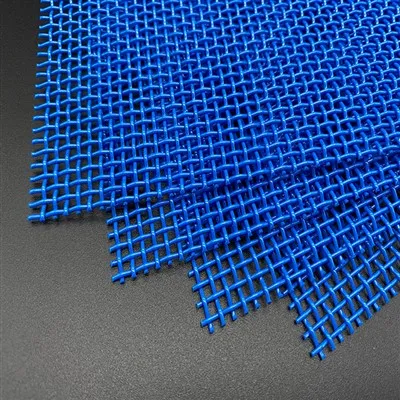
Hey there! As a supplier of Desulfurization Filter Cloth, I often get asked about the filtration accuracy of this essential product. So, let's dive right in and break it down.
What's Filtration Accuracy Anyway?
Filtration accuracy, in simple terms, is how well a filter can trap and separate particles of a certain size from a fluid. When it comes to desulfurization filter cloth, we're mainly dealing with separating solid particles from a liquid or gas stream during the desulfurization process. This is crucial because in industries like power generation, chemical processing, and waste management, getting rid of sulfur compounds and other impurities is a must to meet environmental standards and keep equipment running smoothly.
Factors Affecting Filtration Accuracy
There are several factors that can impact the filtration accuracy of desulfurization filter cloth.
Fiber Material
The type of fiber used in the filter cloth plays a huge role. Most of the desulfurization filter cloths I supply are made from polyester. Polyester is great because it's strong, resistant to chemicals, and has good dimensional stability. These properties allow the filter cloth to maintain its structure and filtration performance over time. For example, our Polyester Desulfurization Mesh Belt is made from high - quality polyester fibers that can effectively capture particles in the desulfurization process.
Weave Structure
The way the fibers are woven together also affects filtration accuracy. There are different weave patterns like plain weave, twill weave, and satin weave. Plain weave is the simplest and most common. It provides a tight and uniform structure, which is good for capturing smaller particles. Twill weave, on the other hand, offers better flexibility and durability, making it suitable for applications where the filter cloth needs to withstand some mechanical stress. Our FGD Filter Belt comes in various weave structures to meet different filtration requirements.
Pore Size
Pore size is probably the most obvious factor when it comes to filtration accuracy. The size of the pores in the filter cloth determines the size of the particles that can pass through. Smaller pore sizes mean higher filtration accuracy, as they can trap smaller particles. However, it's a balance because if the pores are too small, the flow rate of the fluid through the filter cloth will be reduced, and it may clog up faster. We carefully control the pore size of our Desulfurization Filter Cloth to ensure optimal filtration performance.
Measuring Filtration Accuracy
There are a few ways to measure the filtration accuracy of desulfurization filter cloth. One common method is to use a particle counter. This device can count the number and size of particles in the fluid before and after it passes through the filter cloth. By comparing these two measurements, we can calculate the filtration efficiency, which is a measure of how well the filter cloth is removing particles.
Another way is to use a pressure drop test. As the fluid passes through the filter cloth, there will be a pressure drop across it. If the filter cloth is clogged or has low filtration accuracy, the pressure drop will increase. By monitoring the pressure drop over time, we can assess the performance of the filter cloth and determine when it needs to be replaced.
Importance of Filtration Accuracy in Desulfurization
In the desulfurization process, high filtration accuracy is super important. Firstly, it helps to remove sulfur compounds and other impurities from the gas or liquid stream. This is essential for reducing air pollution and meeting environmental regulations. For example, in power plants, desulfurization is used to remove sulfur dioxide from flue gas before it's released into the atmosphere. If the filtration accuracy of the filter cloth is low, more sulfur dioxide and other pollutants will be emitted, which can have a negative impact on the environment and human health.


Secondly, accurate filtration helps to protect downstream equipment. Particles that are not removed by the filter cloth can cause wear and tear on pumps, valves, and other equipment. This can lead to increased maintenance costs and downtime. By using high - quality desulfurization filter cloth with good filtration accuracy, we can extend the lifespan of the equipment and reduce operating costs.
Our Product's Filtration Accuracy
At our company, we take great pride in the filtration accuracy of our desulfurization filter cloth. Through years of research and development, we've been able to optimize the fiber material, weave structure, and pore size of our products. Our filter cloths are designed to capture particles as small as a few microns, which is pretty impressive.
We also conduct rigorous quality control tests on every batch of filter cloth we produce. This includes particle counting tests, pressure drop tests, and chemical resistance tests. Only when the filter cloth meets our strict quality standards will it be released to the market.
Conclusion
So, in a nutshell, the filtration accuracy of desulfurization filter cloth is determined by factors like fiber material, weave structure, and pore size. It's measured using methods like particle counting and pressure drop tests, and it's crucial for environmental protection and equipment maintenance in the desulfurization process.
If you're in the market for high - quality desulfurization filter cloth, don't hesitate to reach out. We're here to provide you with the best products and solutions for your desulfurization needs. Whether you need a FGD Filter Belt, a Polyester Desulfurization Mesh Belt, or a Desulfurization Filter Cloth, we've got you covered. Let's start a conversation and see how we can work together to improve your desulfurization process.
References
- ASTM International standards on filtration testing
- Industry research reports on desulfurization technology