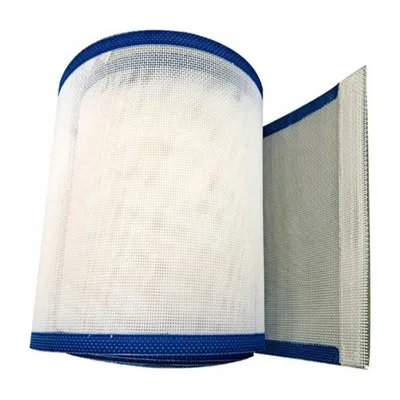
What is the water permeability of a polyester forming fabric?
As a supplier of polyester forming fabrics, I've witnessed firsthand the critical role that water permeability plays in various industrial applications. Polyester forming fabrics are widely used in the paper - making industry, among others, and understanding their water permeability is essential for optimizing the manufacturing process.
Water permeability refers to the ability of a fabric to allow water to pass through it. In the context of polyester forming fabrics, this property is of utmost importance as it directly affects the dewatering efficiency during the paper - making process. When pulp is deposited on the forming fabric, water needs to be removed rapidly to form a solid paper sheet. A fabric with high water permeability can significantly speed up this dewatering process, increasing production efficiency and improving the quality of the final paper product.
Several factors influence the water permeability of polyester forming fabrics. One of the primary factors is the fabric's structure. Different types of polyester forming fabrics have distinct structures that impact how water moves through them.
Polyester Single Layer Forming Fabric
The Polyester Single Layer Forming Fabric is a simple yet effective design. It consists of a single layer of polyester filaments woven together. This type of fabric generally has relatively high water permeability because there are fewer layers for water to pass through. The open structure of the single - layer fabric allows water to flow freely, enabling quick dewatering. However, the single - layer design may have limitations in terms of strength and durability compared to multi - layer fabrics. In some high - speed paper - making machines, the single - layer fabric might experience more wear and tear, which could potentially affect its long - term water permeability.
Two and Half Layer Forming Wrie
The Two and Half Layer Forming Wrie offers a more complex structure. It combines the advantages of a multi - layer design with a unique arrangement that enhances both water permeability and fabric strength. The additional half - layer provides extra support while still allowing water to pass through efficiently. This type of fabric is often used in applications where a balance between dewatering speed and fabric durability is required. The two - and - a - half - layer structure can better withstand the mechanical stresses in the paper - making process, maintaining its water permeability over a longer period.
Polyester Forming Screen Forming Fabric
The Polyester Forming Screen Forming Fabric has a screen - like structure. This design is characterized by a more open and regular pattern, which promotes excellent water permeability. The screen structure allows for a large amount of water to be drained quickly, making it suitable for applications where rapid dewatering is crucial. Additionally, the regular pattern of the screen fabric can also contribute to a more uniform distribution of water removal, resulting in a more consistent paper sheet quality.


The material properties of the polyester used in the forming fabric also play a significant role in water permeability. The diameter of the polyester filaments, their surface smoothness, and the degree of hydrophobicity all affect how water interacts with the fabric. Thinner filaments generally allow for more open spaces between them, facilitating water flow. A smooth surface reduces the resistance to water movement, and a certain level of hydrophobicity can prevent water from being retained within the fabric, promoting faster dewatering.
In addition to the fabric's intrinsic properties, external factors can also influence water permeability. The pressure applied during the dewatering process is a key external factor. Higher pressure can force water through the fabric more quickly, but it also needs to be balanced to avoid damaging the fabric or the paper sheet. The temperature of the pulp and the water can also have an impact. Warmer water has lower viscosity, which means it can flow through the fabric more easily, increasing the water permeability.
To measure the water permeability of polyester forming fabrics, several methods are available. One common method is the Gurley method, which measures the time it takes for a specific volume of air to pass through a fabric under a given pressure. Although this method measures air permeability, there is a correlation between air and water permeability, and it can provide a useful indication of a fabric's ability to allow fluids to pass through. Another method is the cup method, where a known volume of water is placed on the fabric, and the time it takes for the water to pass through is measured.
Maintaining the water permeability of polyester forming fabrics over time is also a challenge. During the paper - making process, the fabric can become clogged with pulp fibers, fines, and other contaminants. This clogging reduces the open spaces in the fabric, decreasing its water permeability. Regular cleaning and maintenance procedures are necessary to remove these contaminants and restore the fabric's water - passing ability. Chemical cleaning agents can be used, but they need to be carefully selected to avoid damaging the polyester material.
In conclusion, the water permeability of polyester forming fabrics is a complex property influenced by multiple factors, including fabric structure, material properties, and external conditions. As a supplier, we understand the importance of providing high - quality fabrics with optimal water permeability to meet the diverse needs of our customers. Whether it's the simple and highly permeable single - layer fabric, the balanced two - and - a - half - layer design, or the open - structured screen fabric, we strive to offer the best solutions for efficient dewatering in the paper - making and other related industries.
If you are in the market for polyester forming fabrics and want to discuss the water permeability requirements for your specific application, we are here to help. Contact us to start a conversation about how our products can enhance your production process and improve the quality of your final products.
References
- "Handbook of Paperboard and Paper Converting"
- "Principles of Paper Making"
- "Advanced Textile Materials for Industrial Applications"