


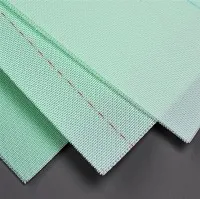

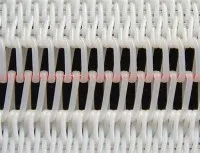


Polyester Press Filter Fabric
Polyester press filter fabric is a type of fabric specifically designed for use in press filtration applications. It is made from polyester fibers, which give it several desirable characteristics.This fabric is often used in processes where liquid needs to be filtered or separated from solid particles. The small pores in the fabric allow the liquid to pass through while trapping the solid particles. Polyester press filter fabric is known for its durability, resistance to chemicals, and ability to withstand high temperatures and pressures.
High Filtration Efficiency
The small pores in the fabric allow for efficient filtration, trapping solid particles while allowing liquid to pass through.
Durability
Polyester is a strong and durable material that can withstand harsh conditions, including high temperatures, chemicals, and mechanical stress.
Resistance To Chemicals
Polyester press filter fabric is resistant to a wide range of chemicals, making it suitable for applications in industries where corrosive substances are present.
Good Cake Release
The fabric has good cake release properties, meaning it easily releases the filtered solid particles, preventing clogging and ensuring smooth operation of the filtration process.
Easy Cleaning
Polyester press filter fabric can be easily cleaned using various methods, such as backwashing or chemical cleaning, to maintain its filtration efficiency.
Versatility
It comes in different pore sizes and thicknesses, making it suitable for a wide range of filtration applications and requirements.


Why Choose Us
Customer Satisfaction
We are committed to delivering high quality services that exceed our clients' expectations. We strive to ensure that our clients are satisfied with our services and work closely with them to ensure their needs are met.
Quality Assurance
We have a rigorous quality assurance process in place to ensure that all our services meet the highest standards of quality. Our team of quality analysts checks each project thoroughly before it is delivered to the client.
State-of-the-art Technology
We use the latest technology and tools to deliver high quality services. Our team is well-versed in the latest trends and advancements in technology and uses them to provide the best results.
Competitive Pricing
We offer competitive pricing for our services without compromising on quality. Our prices are transparent, and we do not believe in hidden charges or fees.
Customer Service
We earn your respect by delivering on time and on budget. We built our reputation on exceptional customer service. Discover the difference it makes.
One-stop service
We promise to provide you with the fastest reply, the best price, the best quality, and the most complete after-sales service.
How is polyester press filter fabric made
Polyester Fibers
High-quality polyester fibers are selected as the raw material.
Quality Control
The finished fabric undergoes strict quality control checks to ensure it meets the required specifications and performance standards.
Weaving Or Knitting
The fibers are woven or knitted together to form the base fabric. This can be done using different weaving or knitting techniques to achieve the desired fabric structure and pore size.
Finishing Processes
The fabric may undergo additional treatments such as heat setting, calendaring, or coating to enhance its properties, such as durability, porosity, or chemical resistance.
The maximum temperature that polyester press filter fabric can withstand depends on the specific grade and formulation of the fabric. Generally speaking, polyester fibers have a good resistance to high temperatures.Most polyester press filter fabrics can withstand temperatures in the range of 130°C to 150°C without significant degradation. However, some specialized grades of polyester may be able to withstand higher temperatures, up to 200°C or more.It's important to note that exposure to high temperatures over an extended period of time can still cause some degradation of the fabric, such as loss of strength or changes in dimensions. Therefore, it's recommended to choose a polyester press filter fabric that is suitable for the maximum temperature of the filtration process to ensure optimal performance and durability.If you need to filter liquids or gases at extremely high temperatures, other materials may be more suitable, such as fluoropolymers or ceramic fibers. These materials can withstand temperatures above 200°C and even up to several hundred degrees Celsius.If you have specific temperature requirements for your filtration application, it's best to consult the manufacturer or supplier of the polyester press filter fabric to ensure you choose the right grade and formulation for your needs. They can provide more accurate information and recommendations based on their product offerings and experience.
The pore size of polyester press filter fabric can vary depending on the specific application and the desired level of filtration. Pore size is typically measured in micrometers (μm) or millimeters (mm).Common pore sizes for polyester press filter fabric range from a few micrometers to tens or even hundreds of micrometers. The smaller the pore size, the finer the particles the fabric can filter out.The pore size selection depends on factors such as the type of particles to be filtered, the required filtration efficiency, and the flow rate of the fluid. A smaller pore size generally results in better filtration but may also lead to higher pressure drop across the fabric.It's important to note that the actual pore size may not be uniform throughout the fabric and can vary depending on the manufacturing process and the specific fabric properties.To determine the appropriate pore size for your specific application, it's best to consult with filter fabric manufacturers or experts in the field. They can provide guidance based on your requirements and recommend the most suitable pore size for optimal filtration performance.
What are the common applications of polyester press filter fabric
Liquid Filtration
Polyester press filter fabric is widely used in liquid filtration applications, such as in the beverage, food, chemical, and pharmaceutical industries. It can filter out suspended solids, bacteria, and other impurities from liquids.
Air Filtration
Polyester press filter fabric is also used in air filtration applications, such as in HVAC systems, air purifiers, and industrial dust collectors. It can remove particles, dust, and other airborne contaminants from the air.
Oil And Gas Filtration
Polyester press filter fabric is used in oil and gas filtration applications to remove impurities and contaminants from oil and gas streams. It can filter out particles, sediments, and water, ensuring the quality and purity of the fluid.
Wastewater Treatment
Polyester press filter fabric is used in wastewater treatment plants to filter out suspended solids and impurities from wastewater. It can help improve the quality of the treated water before it is discharged into the environment.
Mining And Mineral Processing
Polyester press filter fabric is used in mining and mineral processing operations to filter out particles and impurities from slurries and liquids. It can help improve the recovery rate of valuable minerals and reduce environmental pollution.
Biological And Pharmaceutical Filtration
Polyester press filter fabric is used in biological and pharmaceutical filtration applications to filter out bacteria, viruses, and other microorganisms from liquids and gases. It can ensure the purity and safety of the final product.
Textile Manufacturing
Polyester press filter fabric is used in textile manufacturing processes to filter out lint, fibers, and other impurities from the air and liquids. It can help improve the quality of the final product and reduce the risk of equipment failure.
Automotive Filtration
Polyester press filter fabric is used in automotive filtration applications, such as in oil filters, air filters, and fuel filters. It can remove particles, sediments, and other contaminants from fluids and gases, ensuring the reliable operation of the engine and other components.
How Does The Pore Size Of Polyester Press Filter Fabric Affect Its Filtration Performance
Particle Retention: Smaller pore sizes allow for the retention of smaller particles, providing finer filtration. This is important in applications where very small particles need to be removed, such as in the purification of liquids or the capture of fine dust.
Filtration Efficiency: A smaller pore size generally leads to a higher filtration efficiency, as it困住 more particles and reduces the likelihood of them passing through the fabric.
Flow Rate And Pressure Drop: Smaller pore sizes can result in increased resistance to fluid flow, which may lead to higher pressure drop across the filter. This needs to be considered in applications where maintaining a certain flow rate is important.
Selective Filtration: Different pore sizes can be used to selectively filter out specific particle sizes, allowing for more targeted filtration.
Contaminant Removal: The appropriate pore size can help remove specific contaminants, whether it's large particles, microorganisms, or dissolved substances.

Polyester press filter fabric has good resistance to acids and alkalis, making it suitable for use in a wide range of pH environments. Polyester is a synthetic polymer that is relatively stable and does not degrade or react significantly when exposed to acidic or alkaline solutions.However, the resistance of polyester to specific acids and alkalis may vary depending on the concentration, temperature, and duration of exposure. In general, polyester can withstand mild to moderate acids and alkalis, such as acetic acid, citric acid, sodium hydroxide, and potassium hydroxide. It is less resistant to strong acids such as nitric acid and sulfuric acid, as well as strongly alkaline solutions.If you are using polyester press filter fabric in an acidic or alkaline environment, it is recommended to conduct compatibility tests or consult with the fabric manufacturer to ensure that it can withstand the specific conditions of your application. They can provide guidance on the appropriate fabric grade and treatment, if necessary, to enhance its resistance to acids and alkalis.It's important to note that while polyester has good resistance to acids and alkalis, it may not be suitable for all chemical environments. In some cases, alternative materials such as polypropylene or nylon may be more suitable depending on the specific chemical properties and requirements of the application.If you have any concerns about the compatibility of polyester press filter fabric with your chemical environment, it's best to consult with experts or fabric manufacturers who can provide more specific advice based on your needs. They can help you select the most suitable fabric for your application and ensure its long-term performance and reliability.
What Are The Factors To Consider When Choosing A Polyester Press Filter Fabric
Filtration Requirements: Determine the size of the particles or contaminants you need to remove and the level of filtration efficiency required. This will help you select a fabric with an appropriate pore size.
Chemical Compatibility: Consider the chemicals or substances the fabric will come into contact with, especially if it's in an acidic or alkaline environment. Ensure the fabric is compatible with those substances to avoid degradation or damage.
Durability And Strength: Look for a fabric that is strong and durable to withstand the pressure and wear of the filtration process. Consider the fabric's tensile strength and resistance to abrasion.
Temperature Resistance: If the filtration process involves high or low temperatures, make sure the fabric can withstand those temperatures without degradation or loss of performance.
Moisture Resistance: If the fabric will be exposed to moisture or humid conditions, it should have good moisture resistance to prevent swelling or degradation.
Cost And Availability: Consider the cost of the fabric and its availability in the desired quantities and sizes. Also, look for a supplier with a good reputation and reliable delivery.
Manufacturer Reputation: Research the reputation of the manufacturer to ensure you're getting a high-quality fabric that meets industry standards.
Customization Options: Some applications may require customized fabrics with specific properties or finishes. Check if the manufacturer offers customization options to meet your unique needs.
How Does The Thickness Of The Polyester Press Filter Fabric Affect Its Performance
Thicker fabrics generally provide better particle retention, as they have more fibers and a greater surface area to trap particles. This can result in higher filtration efficiency and better removal of small particles.
Thicker fabrics can increase resistance to fluid flow, resulting in higher pressure drop across the filter. This needs to be considered in applications where maintaining a certain flow rate is important.
Thicker fabrics tend to be more durable and resistant to wear and tear. They can withstand higher pressure and mechanical stress during the filtration process, extending the fabric's lifespan.
Thicker fabrics have a larger volume of fibers, which allows them to trap and hold more particles before requiring cleaning or replacement. This can increase the filter's capacity and reduce the frequency of maintenance.
Thicker fabrics may have lower permeability, meaning they allow less fluid to pass through. This can be beneficial in applications where precise filtration is required, but it may also result in slower flow rates.
Polyester press filter fabric is generally resistant to abrasion to some extent. Polyester is a synthetic polymer that has good durability and resistance to wear and tear. However, the resistance of polyester to abrasion may vary depending on the specific grade of fabric and the conditions of use.Polyester press filter fabric is often treated or coated to enhance its abrasion resistance. These treatments can include applying a polymer coating or using a reinforcement fabric to increase the fabric's strength and durability. The addition of these treatments can improve the fabric's resistance to abrasion and extend its lifespan.The level of abrasion resistance required will depend on the application and the nature of the fluid or particles being filtered. In applications where the fabric is subject to high levels of friction or contact with abrasive substances, additional measures may be needed to protect the fabric from excessive wear.It's important to note that while polyester press filter fabric is resistant to abrasion, it may not be suitable for all applications that require extreme abrasion resistance.
How Often Should Polyester Press Filter Fabric Be Replaced
Filter Performance: If the fabric is no longer effectively removing particles or contaminants, it may be a sign that it needs to be replaced. Monitor the filter's performance by regularly checking the quality of the filtered fluid or by using particle counters.
Pressure Drop: As the fabric becomes clogged with particles, the pressure drop across the filter may increase. If the pressure drop becomes excessive, it can affect the flow rate and efficiency of the filtration process. Monitor the pressure drop and replace the fabric when it starts to impact the system's performance.
Visual Inspection: Regularly inspect the fabric for signs of wear, tears, or holes. If the fabric appears damaged or worn, it may need to be replaced to ensure effective filtration.
Particle Loading: The amount of particle loading on the fabric can affect its performance and lifespan. If the fabric is consistently exposed to high levels of particle loading, it may need to be replaced more frequently.
Operating Hours: The length of time the fabric has been in operation can also be a factor. Over time, the fabric may degrade or lose its effectiveness due to exposure to the fluid and particles being filtered.
Does Polyester Press Filter Fabric Have Good Chemical Resistance
Polyester press filter fabric generally has good chemical resistance, but its resistance to specific chemicals can vary. Polyester is a synthetic polymer that is relatively stable and can withstand a wide range of chemicals, but there are some exceptions.Polyester is resistant to mild acids, alkalis, and many common solvents. It can handle substances such as water, mild detergents, and some organic compounds. However, it may have limited resistance to strong acids like nitric acid or sulfuric acid, as well as highly alkaline solutions.The chemical resistance of polyester also depends on factors such as the concentration of the chemical, the temperature, and the duration of exposure. Some chemicals may cause degradation or swelling of the fabric over time.If you are working with chemicals that are known to be aggressive or corrosive, it's important to consider alternative materials or treatments that offer better chemical resistance. For example, fluorinated polymers or specialty coatings can enhance the chemical resistance of the fabric.When choosing a polyester press filter fabric for chemical applications, it's recommended to consult with the fabric manufacturer or a chemical resistance chart specific to the fabric. They can provide more detailed information about the fabric's compatibility with different chemicals and offer guidance on the most suitable fabric for your particular chemical environment.It's always a good practice to conduct compatibility tests or small-scale trials before using the fabric in a critical or demanding chemical application. This helps ensure the fabric can withstand the specific chemicals and conditions it will be exposed to, minimizing the risk of failure or degradation.
Can Polyester Press Filter Fabric Be Sterilized
Autoclaving
Autoclaving is a common method of sterilization that uses steam under pressure to kill microorganisms. Polyester filter fabric can withstand the high temperatures and pressure involved in autoclaving without significant damage or change in properties. Autoclaving is effective for eliminating bacteria, fungi, and viruses.
Gamma Irradiation
Gamma irradiation is a process that uses high-energy gamma rays to sterilize materials. Polyester filter fabric can be exposed to gamma irradiation without significant impact on its properties. This method is suitable for large-scale sterilization and can effectively kill microorganisms.
Ethylene Oxide (eo) Gas Sterilization
Ethylene oxide gas is a chemical sterilant that can penetrate materials and kill microorganisms. Polyester filter fabric can be sterilized using EO gas, but it's important to ensure proper ventilation and handling after sterilization to remove any residual EO gas.
Hot Air Oven Sterilization
Polyester filter fabric can also be sterilized using a hot air oven. This method involves exposing the fabric to high temperatures for a certain period to kill microorganisms. However, it may not be as effective as autoclaving or gamma irradiation for eliminating certain types of microorganisms.The choice of sterilization method depends on the specific application and requirements. Autoclaving is often the preferred method for general sterilization, while gamma irradiation or EO gas sterilization may be used for specific applications or when autoclaving is not feasible.It's important to note
Is polyester press filter fabric easy to install and maintain
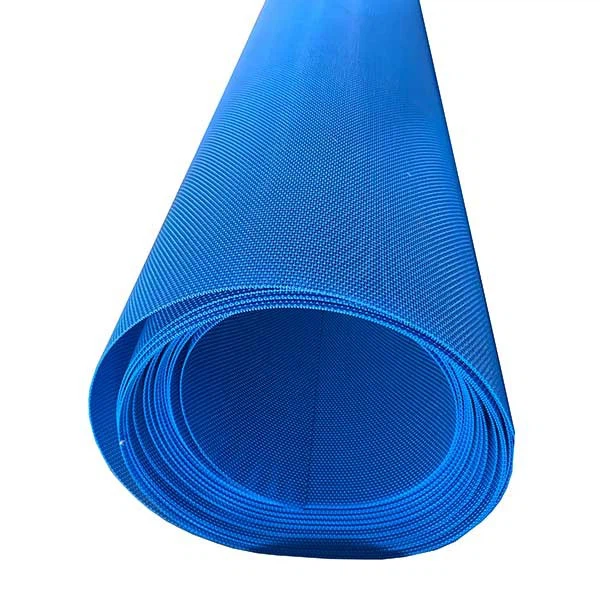
Installation: Polyester filter fabric is usually supplied in rolls or sheets, making it easy to handle and install. The fabric can be cut to the desired size and shape, and it can be attached to the filter frame or housing using various methods such as sewing, gluing, or clamping.
Durability: Polyester is a durable material that resists wear and tear, which means it requires relatively minimal maintenance. It can withstand regular use and cleaning without significant degradation.
Cleaning: Polyester filter fabric can be cleaned by various methods, depending on the nature of the contaminants. It can be washed with water, mild detergents, or other suitable cleaning agents. Some fabrics may be compatible with steam cleaning or pressure washing.
Inspecting And Replacing: Regular visual inspection of the fabric can help identify any signs of damage or wear. If any sections of the fabric are damaged or worn, they can be easily replaced without the need to replace the entire filter.
Compatibility With Existing Systems: Polyester filter fabric is widely used and compatible with many existing filter systems, making integration and installation straightforward.
Our Factory
The company is a professional paper mesh and industrial mesh manufacturing enterprises, with domestic and international world advanced level of paper mesh, industrial mesh complete sets of production equipment and technology. We has 3 sets of Swedish TEXO 12.5 meters loom, four warp beam heavy duty loom, Swedish TEXO warping machine, Norwegian 13.5 meters hot air sizing machine, Austrian automatic inserting and joining machine, American Nordson brushing and gluing machine, Swiss Lippo permeability tester and other advanced equipment and testing instruments. Our products are exported to many countries, such as Russia, France, Portugal, India, Pakistan, Iran, Turkey, Thailand, Indonesia and so on.


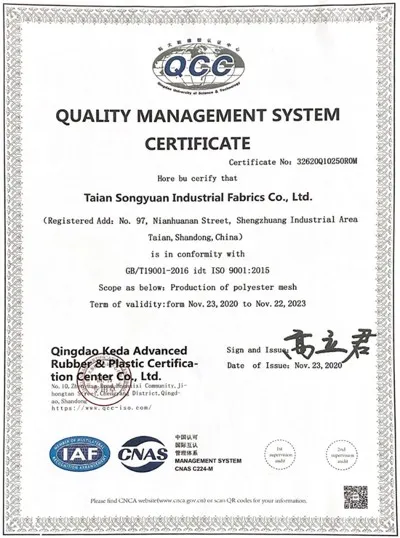
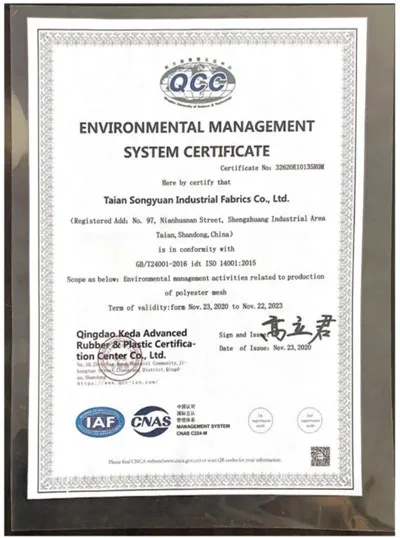
Our Certificate

FAQ
Q: What is polyester press filter fabric?
Q: How is polyester press filter fabric made?
Q: What are the advantages of using polyester press filter fabric?
Q: What is the maximum temperature that polyester press filter fabric can withstand?
Q: How is polyester press filter fabric installed in a filter press?
Q: What is the pore size of polyester press filter fabric?
Q: How do you choose the right pore size for polyester press filter fabric?
Q: Can polyester press filter fabric be customized?
Q: How do you clean polyester press filter fabric?
Q: How long does polyester press filter fabric last?
Q: What are the common applications of polyester press filter fabric?
Q: Can polyester press filter fabric be used for oil filtration?
Q: Are polyester press filter fabrics resistant to chemicals?
Q: Can polyester press filter fabric be repaired?
Q: How do polyester press filter fabrics affect filtration efficiency?
Q: What are the alternatives to polyester press filter fabric?
Q: Can polyester press filter fabric be recycled?
Q: How do you store polyester press filter fabric?
Q: Are there any safety precautions when using polyester press filter fabric?
Q: Where can I purchase polyester press filter fabric?
Hot Tags: polyester press filter fabric, China polyester press filter fabric manufacturers, suppliers, factory, sludge dewatering mesh belt guarantee, sludge dewatering mesh belt purchase, sludge dewatering capacity, mesh belt for industrial sludge treatment, sludge dewatering mesh belt durability test, mesh belt for sludge dewatering consultancy
You Might Also Like


Send Inquiry