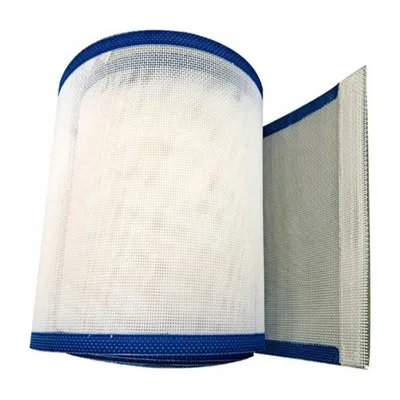
UV exposure is a factor that can't be ignored when it comes to the performance of polyester press filter fabric. As a supplier of Polyester Press Filter Fabric, I've seen firsthand how UV rays can impact these fabrics, and I'm here to share some insights.
Understanding Polyester Press Filter Fabric
Polyester press filter fabric is widely used in various industries, especially in sludge dewatering processes. It's known for its durability, chemical resistance, and high filtration efficiency. Products like the Polyester Sludge Dewatering Belt, Sludge Dewatering Filter Fabric Belt, and Sludge Dewatering Mesh are some of the popular items in the market. These fabrics help in separating solids from liquids, making them essential in waste management and industrial processes.
How UV Rays Interact with Polyester
UV rays are a part of the sunlight spectrum, and they carry a significant amount of energy. When polyester press filter fabric is exposed to UV rays, several chemical and physical changes can occur.
Chemical Degradation
Polyester is a polymer, and UV rays can break the chemical bonds in the polymer chains. This process is called photodegradation. The high - energy UV photons can cause the polyester molecules to lose their structural integrity. Over time, the fabric becomes more brittle as the long - chain polymers are broken down into smaller fragments. This chemical degradation can lead to a reduction in the fabric's strength and flexibility.
Physical Changes
Apart from chemical degradation, UV exposure also causes physical changes in the fabric. The surface of the polyester press filter fabric can become rough due to the breakdown of the polymer chains. This roughness can affect the filtration performance. For example, it may cause clogging as particles are more likely to get trapped on the rough surface. Also, the fabric may start to lose its shape as the weakened polymer structure can't maintain its original form.
Impact on Filtration Performance
The changes caused by UV exposure have a direct impact on the filtration performance of polyester press filter fabric.
Reduced Filtration Efficiency
As the fabric becomes brittle and rough, its ability to separate solids from liquids is compromised. The rough surface can trap particles more easily, but it also restricts the flow of liquid through the fabric. This leads to a decrease in the filtration rate, meaning that it takes longer to dewater the sludge. In industrial settings, this can slow down the entire production process and increase operational costs.
Decreased Solids Retention
The chemical degradation of the fabric can also affect its ability to retain solids. The weakened polymer structure may not be able to hold the solid particles effectively, resulting in more solids passing through the fabric. This is a major problem in sludge dewatering applications, as the goal is to separate as much solid waste as possible from the liquid.
Shortened Lifespan
UV exposure significantly shortens the lifespan of polyester press filter fabric. The fabric that would normally last for a reasonable period under normal conditions may need to be replaced much earlier when exposed to high levels of UV rays. This not only adds to the cost of purchasing new fabric but also causes downtime during the replacement process.
Factors Affecting UV Damage
Several factors can influence the extent of UV damage to polyester press filter fabric.
Intensity and Duration of UV Exposure
The stronger the UV rays and the longer the fabric is exposed to them, the more severe the damage will be. For example, in regions with high sunlight intensity, such as deserts or tropical areas, the fabric will experience more rapid degradation compared to areas with less sunlight.
Fabric Thickness and Quality
Thicker fabrics generally have more resistance to UV damage as there is more material to absorb the UV rays. High - quality polyester press filter fabrics are also often treated with UV - resistant additives, which can slow down the photodegradation process.
Environmental Conditions
Other environmental factors, such as temperature and humidity, can also interact with UV exposure. High temperatures can accelerate the chemical reactions caused by UV rays, while high humidity can cause the fabric to absorb more moisture, which may further weaken the polymer structure.
Mitigating UV Damage
As a supplier, I understand the importance of helping our customers protect their polyester press filter fabric from UV damage.


UV - Resistant Coatings
One way to protect the fabric is by applying UV - resistant coatings. These coatings act as a barrier between the fabric and the UV rays, absorbing or reflecting the harmful radiation. There are different types of coatings available in the market, and choosing the right one depends on the specific application and environmental conditions.
Shading
Another simple yet effective method is to provide shading for the fabric. This can be done by installing a canopy or using other shading structures. By reducing the direct exposure to sunlight, the fabric's lifespan can be significantly extended.
Regular Inspection and Maintenance
Regular inspection of the fabric is crucial to detect any signs of UV damage early. If damage is detected, appropriate measures can be taken, such as replacing the damaged parts or applying a new coating. Maintenance also includes cleaning the fabric regularly to remove any particles that may have accumulated on the surface.
Conclusion
UV exposure is a serious threat to the performance and lifespan of polyester press filter fabric. As a supplier, I'm committed to providing high - quality products and solutions to help our customers deal with this issue. By understanding the impact of UV rays on the fabric, taking preventive measures, and performing regular maintenance, the negative effects of UV exposure can be minimized.
If you're in the market for high - quality polyester press filter fabric or need advice on protecting your existing fabric from UV damage, feel free to reach out. We're here to help you make the most of your filtration systems and ensure smooth operations in your industry.
References
- ASTM International. (20XX). Standard test methods for evaluating the effects of environmental conditions on the performance of filtration fabrics.
- Smith, J. (20XX). The impact of UV radiation on polymer materials. Journal of Polymer Science.
- Environmental Protection Agency. (20XX). Guidelines for sludge dewatering and management.