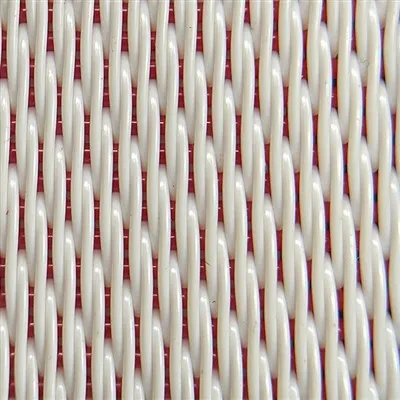
As a supplier of Polyester Vacuum Filter Belts, I've seen firsthand how crucial precision is in these products. Precision in a polyester vacuum filter belt can make or break the efficiency of filtration processes across various industries. In this blog, I'll dive into the factors that can affect the precision of these belts and why it matters for your operations.
Material Quality
The quality of the polyester material used in the filter belt is the foundation of its precision. High - quality polyester fibers have consistent diameters and properties. When the fibers are uniform, the belt can form a more regular pore structure. This regular pore structure is essential for precise filtration because it allows for consistent particle retention.
For example, if the polyester fibers have inconsistent diameters, some pores may be larger than others. Larger pores can let through particles that should be filtered out, reducing the precision of the filtration process. On the other hand, using high - grade polyester ensures that the pores are within the desired size range, leading to more accurate separation of solids and liquids.
We offer Polyester Filter Belt For Desulfurization made from top - notch polyester materials. These belts are designed to provide high - precision filtration in desulfurization processes, where accurate particle removal is critical for environmental compliance and efficient operation.
Manufacturing Process
The manufacturing process of the polyester vacuum filter belt has a huge impact on its precision. One of the key steps is weaving. The way the polyester fibers are woven together determines the belt's strength, flexibility, and pore size distribution.
If the weaving process is not well - controlled, the belt may have uneven areas where the pores are either too large or too small. This can cause inconsistent filtration performance. For instance, in a poorly woven belt, some sections may allow more liquid to pass through quickly, while others may be clogged more easily.
Another important aspect is the finishing process. After weaving, the belt may undergo treatments such as heat setting and coating. Heat setting helps to stabilize the structure of the belt, preventing it from stretching or shrinking during use. A well - heat - set belt maintains its shape and pore size, ensuring consistent precision over time.
Our Polyester Desulfurization Mesh Belt is manufactured using state - of - the - art processes. We pay close attention to every step, from weaving to finishing, to ensure that each belt meets the highest standards of precision.
Operating Conditions
The conditions under which the polyester vacuum filter belt operates can also affect its precision. Temperature is a significant factor. High temperatures can cause the polyester material to expand, which may change the pore size of the belt. If the temperature is too high, the belt may become more flexible and prone to stretching, leading to larger pores and reduced filtration precision.
Conversely, low temperatures can make the belt more brittle. A brittle belt is more likely to crack or break, which can disrupt the filtration process and cause inaccurate separation.
The pH level of the filtrate is another important consideration. Polyester is generally resistant to a wide range of pH values, but extreme acidity or alkalinity can still have an impact. For example, in highly acidic environments, the polyester fibers may start to degrade over time, changing the pore structure and reducing the belt's precision.
We understand the importance of operating conditions, and our Vacuum Filter Cloth Polyester Mesh Belts are designed to withstand a variety of temperatures and pH levels. However, it's still crucial for our customers to monitor and control these conditions to maintain the precision of the belts.
Maintenance and Cleaning
Proper maintenance and cleaning of the polyester vacuum filter belt are essential for maintaining its precision. Over time, particles can accumulate on the belt, clogging the pores and reducing its filtration efficiency. If the belt is not cleaned regularly, the pressure drop across the belt will increase, and the filtration rate will decrease.
There are different cleaning methods available, such as backwashing and chemical cleaning. Backwashing involves reversing the flow of liquid through the belt to dislodge the trapped particles. Chemical cleaning uses specific chemicals to dissolve or remove stubborn deposits.
However, it's important to use the right cleaning methods and chemicals. Using the wrong chemicals can damage the polyester material, altering the pore structure and reducing the belt's precision. We provide guidelines to our customers on how to properly maintain and clean our belts to ensure long - term precision.


Belt Tension
The tension applied to the polyester vacuum filter belt during operation is also a factor that affects its precision. If the belt is too loose, it may sag or wrinkle, causing uneven distribution of the filtrate and inconsistent filtration. Loose belts can also slip on the rollers, which can disrupt the overall operation of the filtration system.
On the other hand, if the belt is too tight, it can put excessive stress on the polyester fibers. This may lead to premature wear and tear, and in some cases, the belt may break. Maintaining the correct belt tension is crucial for ensuring that the belt operates smoothly and provides precise filtration.
We recommend that our customers regularly check and adjust the belt tension according to the manufacturer's specifications. This simple step can significantly improve the precision and longevity of the polyester vacuum filter belt.
Why Precision Matters
Precision in a polyester vacuum filter belt is not just about getting the job done; it's about getting it done right. In industries such as mining, chemical processing, and food and beverage, accurate filtration is essential for product quality, environmental compliance, and cost - effectiveness.
In the mining industry, for example, precise filtration is needed to separate valuable minerals from the ore. A high - precision filter belt ensures that the minerals are recovered efficiently, while minimizing the loss of valuable materials.
In the food and beverage industry, filtration is used to remove impurities and clarify liquids. A precise filter belt ensures that the final product meets the highest quality standards, free from unwanted particles.
Contact Us for High - Precision Polyester Vacuum Filter Belts
If you're in the market for high - precision polyester vacuum filter belts, look no further. We're a trusted supplier with years of experience in providing top - quality belts for various industries. Our belts are designed and manufactured to meet the most demanding filtration requirements.
Whether you need a Polyester Filter Belt For Desulfurization, Polyester Desulfurization Mesh Belt, or Vacuum Filter Cloth Polyester Mesh Belts, we've got you covered. Contact us today to discuss your specific needs and let's start a fruitful business relationship.
References
- Smith, J. (2020). Filtration Technology: Principles and Applications. Publisher XYZ.
- Brown, A. (2019). Polyester Materials in Industrial Filtration. Journal of Industrial Materials, 15(2), 45 - 56.