

Hey there! As a supplier of Sludge Dewatering Mesh Belts, I've seen firsthand how crucial it is to choose the right one for your specific needs. In this blog, I'll share some tips on how to make that choice, so you can get the most out of your sludge dewatering process.
Understanding Your Sludge
First things first, you need to understand the characteristics of the sludge you're dealing with. Different types of sludge have different properties, such as particle size, density, and moisture content. These factors can greatly affect the performance of your dewatering mesh belt.
For example, if your sludge has a high content of fine particles, you'll need a mesh belt with a smaller pore size to prevent the particles from passing through. On the other hand, if your sludge is relatively coarse, a belt with a larger pore size may be more suitable.
Consider the Dewatering Process
The dewatering process you're using also plays a significant role in choosing the right mesh belt. There are several methods of sludge dewatering, including belt presses, centrifuges, and filter presses. Each method has its own requirements for the mesh belt.
Belt presses, for instance, require a mesh belt that can withstand high pressure and provide good drainage. The Polyester Sludge Dewatering Mesh is a great option for belt presses. It's made of high-quality polyester material, which is strong, durable, and resistant to chemicals.
Centrifuges, on the other hand, need a mesh belt that can handle high-speed rotation and provide efficient separation of solids and liquids. The Polyester Spiral Press-Filter Weave Conveyor Belt is designed specifically for centrifuge applications. It has a unique spiral weave structure that allows for better drainage and improved dewatering efficiency.
Filter presses require a mesh belt that can provide a tight seal and prevent leakage. The Polyester Press Filter Fabric is an excellent choice for filter presses. It's made of a special fabric that has high tensile strength and good filtration properties.

Evaluate the Mesh Belt Material
The material of the mesh belt is another important factor to consider. There are several materials available for sludge dewatering mesh belts, including polyester, polypropylene, and stainless steel.
Polyester is a popular choice because it's strong, durable, and resistant to chemicals. It also has good filtration properties and can be easily cleaned. The Polyester Sludge Dewatering Mesh and Polyester Press Filter Fabric are both made of high-quality polyester material.
Polypropylene is another option. It's lightweight, flexible, and resistant to corrosion. However, it may not be as strong as polyester and may require more frequent replacement.
Stainless steel is a very durable and strong material. It's resistant to high temperatures and chemicals, making it suitable for harsh environments. However, it's also more expensive than polyester and polypropylene.
Look at the Mesh Belt Design
The design of the mesh belt can also affect its performance. There are several design features to consider, such as the pore size, the weave pattern, and the surface texture.
The pore size of the mesh belt determines the size of the particles that can pass through. A smaller pore size will provide better filtration, but it may also reduce the flow rate. A larger pore size will allow for a higher flow rate, but it may not provide as good of a filtration.
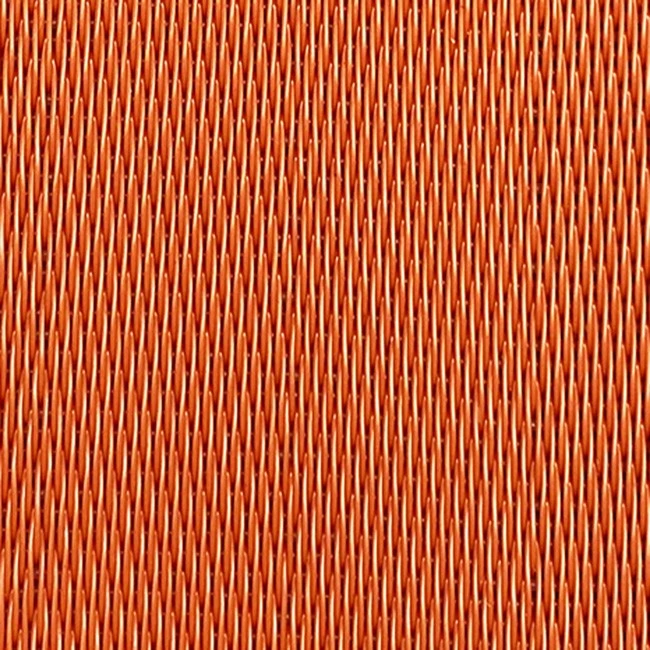
The weave pattern of the mesh belt can also affect its performance. Different weave patterns have different properties, such as strength, flexibility, and drainage. For example, a plain weave pattern is strong and durable, but it may not provide as good of a drainage as a twill weave pattern.
The surface texture of the mesh belt can also affect its performance. A smooth surface texture will allow for better drainage, but it may also be more prone to clogging. A rough surface texture will provide better filtration, but it may also reduce the flow rate.
Check the Mesh Belt Quality
The quality of the mesh belt is crucial for its performance and longevity. When choosing a mesh belt, make sure to check the quality of the material, the construction, and the finishing.
The material of the mesh belt should be of high quality and free from defects. The construction of the mesh belt should be strong and durable, with no loose threads or seams. The finishing of the mesh belt should be smooth and even, with no rough edges or burrs.
Consider the Cost
The cost of the mesh belt is also an important factor to consider. While it's important to choose a high-quality mesh belt, you also don't want to overspend. Make sure to compare the prices of different mesh belts and choose the one that offers the best value for your money.
Conclusion
Choosing the right sludge dewatering mesh belt is crucial for the success of your sludge dewatering process. By understanding the characteristics of your sludge, considering the dewatering process, evaluating the mesh belt material, looking at the mesh belt design, checking the mesh belt quality, and considering the cost, you can make an informed decision and choose the best mesh belt for your needs.
If you have any questions or need more information about our Sludge Dewatering Mesh Belts, please don't hesitate to contact us. We're here to help you find the right solution for your sludge dewatering needs.
References
- "Sludge Dewatering Handbook" by XYZ Publishing
- "The Science of Sludge Dewatering" by ABC Research Institute


