Hey there! As a supplier of monofilament food conveyor belts, I'm super stoked to share with you all the awesome advantages of using these belts in the food industry. Let's dive right in!
1. Hygiene and Food Safety
One of the biggest perks of monofilament food conveyor belts is their outstanding hygiene. Unlike some other types of conveyor belts, monofilament belts are made from a single strand of material. This means there are no crevices or gaps where food particles, bacteria, or other contaminants can get trapped.
When it comes to food processing, cleanliness is of the utmost importance. Monofilament belts are easy to clean and sanitize. You can use high - pressure water jets, detergents, and even some chemical sanitizers without worrying about damaging the belt. This helps to prevent cross - contamination and ensures that the food being transported on the belt remains safe for consumption.
For example, in a bakery, these belts can be used to move freshly baked goods from the oven to the packaging area. Since they are so easy to clean, you can quickly switch between different products without the risk of flavor transfer or microbial growth.


2. Durability and Longevity
Monofilament food conveyor belts are built to last. They are made from high - quality materials like polyester or nylon, which are known for their strength and resistance to wear and tear. These belts can withstand the rigors of continuous use in a food processing environment, including exposure to high temperatures, moisture, and various chemicals.
Whether you're running a large - scale food production facility or a small artisanal food business, a durable conveyor belt is essential. You don't want to be constantly replacing your belts due to damage or wear. With a monofilament belt, you can expect a long service life, which saves you money in the long run.
Let's say you have a fruit processing plant. The conveyor belts are constantly exposed to the acidic juices from the fruits. A monofilament belt can resist the corrosion caused by these juices and keep running smoothly for years.
3. Flexibility and Customization
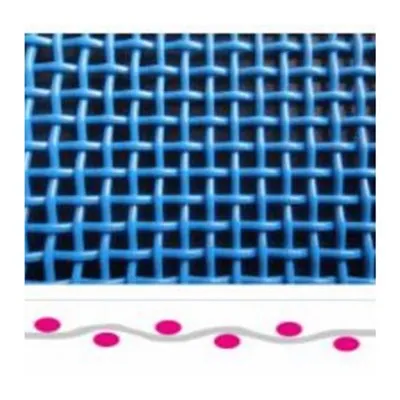
Another great advantage is the flexibility of monofilament food conveyor belts. They can be easily customized to fit the specific needs of your food processing operation. You can choose different widths, lengths, and mesh sizes depending on the type of food you're handling and the layout of your facility.
If you're dealing with small, delicate food items like berries, you can opt for a belt with a fine mesh to prevent the berries from falling through. On the other hand, if you're transporting larger items like whole chickens, a belt with a wider mesh or a solid surface might be more suitable.
Moreover, monofilament belts can be easily adapted to different conveyor systems. Whether you have a straight - line conveyor, a curved conveyor, or a spiral conveyor, these belts can be designed to fit seamlessly.
4. Energy Efficiency
In today's world, energy efficiency is a top priority for many businesses. Monofilament food conveyor belts are relatively lightweight compared to some other types of belts. This means that they require less energy to operate.
Since they have a low coefficient of friction, the motors that drive the conveyor belts don't have to work as hard. This results in lower energy consumption and reduced operating costs. For a food processing plant that runs 24/7, the savings in energy costs can be substantial over time.
5. Versatility in Food Applications
Monofilament food conveyor belts are incredibly versatile and can be used in a wide range of food applications. They are suitable for both wet and dry food processing.
In the meat industry, these belts can be used to transport raw meat, processed meat products, and even bones. In the dairy industry, they can handle milk, cheese, and yogurt. In the vegetable and fruit industry, they are perfect for sorting, washing, and packaging produce.
For instance, in a vegetable washing facility, the monofilament belt can be used to carry the vegetables through the washing process. The open mesh design allows the water to drain easily, ensuring that the vegetables are thoroughly cleaned.
Related Products
If you're interested in exploring more options related to monofilament belts, we have some great products to offer. Check out our PET Mesh Belt For Food Drying, which is perfect for drying various food products. Also, our Linear Screen Cloths are ideal for sorting and screening food items. And don't forget our Polyester Mesh Fabric Conveyor Belt, which offers excellent durability and flexibility.
Conclusion
In conclusion, monofilament food conveyor belts offer a whole host of advantages for the food industry. From hygiene and food safety to durability, flexibility, energy efficiency, and versatility, these belts are a smart choice for any food processing operation.
If you're in the market for a high - quality monofilament food conveyor belt, I encourage you to reach out to us. We're here to help you find the perfect belt for your specific needs. Whether you have questions about sizing, customization, or installation, our team of experts is ready to assist you. Let's work together to make your food processing operation more efficient and successful!
References
- "Food Conveyor Belt Technology: A Comprehensive Guide" by Food Industry Press
- "Materials and Design of Conveyor Belts for Food Applications" by Journal of Food Engineering