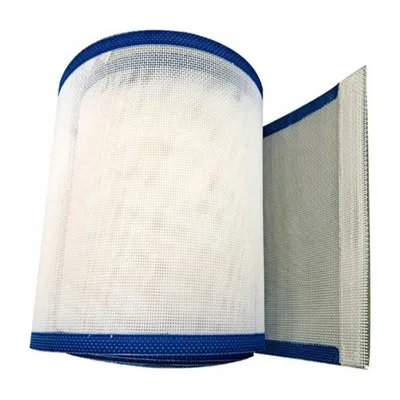
As a leading supplier of Two And Half Layer Forming Wire, I have witnessed firsthand the importance of surface finish in this specialized product. The surface finish of Two And Half Layer Forming Wire plays a crucial role in various industrial applications, especially in the paper and non - woven industries. In this blog, I will delve into what the surface finish of Two And Half Layer Forming Wire is, its significance, and how it impacts the overall performance of the product.


Understanding the Basics of Two And Half Layer Forming Wire
Before we discuss the surface finish, it is essential to understand what Two And Half Layer Forming Wire is. This type of forming wire is an innovative solution that combines the advantages of different layer structures. It offers a unique balance between strength, drainage, and sheet formation. The two - and - a - half - layer design typically consists of two main layers with an additional partial layer, which provides enhanced support and performance characteristics.
The Concept of Surface Finish
Surface finish refers to the quality and characteristics of the outer surface of the Two And Half Layer Forming Wire. It encompasses a variety of factors, including smoothness, roughness, texture, and porosity. A well - defined surface finish can significantly influence the interaction between the forming wire and the material it comes into contact with, such as pulp in the paper - making process or fibers in the non - woven manufacturing.
Smoothness
Smoothness is one of the key aspects of the surface finish. A smooth surface reduces friction between the forming wire and the material being processed. In the paper industry, a smooth surface finish helps in the uniform distribution of pulp on the wire, resulting in a more consistent paper sheet. It also prevents the accumulation of debris and fibers on the wire surface, which can lead to sheet defects and reduced wire lifespan.
Roughness
In some cases, a certain degree of roughness can be beneficial. A slightly rough surface can improve the grip between the forming wire and the material, which is particularly important during the initial stages of sheet formation. However, excessive roughness can cause problems such as uneven sheet formation and increased wear on the wire. Therefore, achieving the right balance of roughness is crucial for optimal performance.
Texture
The texture of the surface finish can also have a significant impact. A textured surface can enhance drainage by providing channels for water to flow through. This is especially important in the paper - making process, where efficient drainage is essential for the formation of a high - quality paper sheet. Different textures can be engineered into the surface of the Two And Half Layer Forming Wire to meet specific application requirements.
Porosity
Porosity is another important factor in the surface finish. The pores in the forming wire surface allow water to pass through while retaining the solid particles of the pulp or fibers. A well - controlled porosity ensures proper drainage and prevents the loss of valuable material. Additionally, the size and distribution of the pores can affect the sheet formation and the overall quality of the final product.
Significance of Surface Finish in Industrial Applications
Paper Industry
In the paper industry, the surface finish of Two And Half Layer Forming Wire is directly related to the quality of the paper produced. A smooth and well - textured surface finish promotes uniform sheet formation, reduces the occurrence of holes and spots in the paper, and improves the overall appearance and strength of the paper. Moreover, a proper surface finish can increase the efficiency of the paper - making process by enhancing drainage and reducing the drying time.
Non - woven Industry
In the non - woven industry, the surface finish of the forming wire affects the formation and quality of the non - woven fabrics. A suitable surface finish can ensure that the fibers are evenly distributed and bonded together, resulting in a more consistent and high - quality non - woven product. It also plays a role in the release of the non - woven fabric from the forming wire, which is crucial for the efficiency of the production process.
Comparison with Other Related Products
When considering the surface finish of Two And Half Layer Forming Wire, it is interesting to compare it with other similar products such as One and Half Layer Forming Mesh and Triple Layer Forming Fabrics.
One and Half Layer Forming Mesh typically has a simpler structure and may have a different surface finish requirement. It is often used in applications where a lower level of support and drainage is needed. The surface finish of this type of mesh is usually designed to be more open and porous to facilitate rapid water removal.
On the other hand, Triple Layer Forming Fabrics offer a higher level of strength and support. Their surface finish is engineered to provide a balance between smoothness for sheet formation and porosity for drainage. The additional layer in the triple - layer design allows for more complex surface engineering, which can result in improved performance in certain applications.
Another related product is the Forming Belt For Nonwoven Fabrics. This product is specifically designed for the non - woven industry and has a surface finish that is optimized for fiber handling and fabric formation. The surface finish of the forming belt can be tailored to meet the specific requirements of different non - woven production processes.
Factors Affecting Surface Finish
Several factors can affect the surface finish of Two And Half Layer Forming Wire. These include the manufacturing process, the materials used, and the post - treatment methods.
Manufacturing Process
The manufacturing process of the forming wire has a direct impact on its surface finish. Advanced weaving and knitting techniques can produce a more uniform and precise surface. For example, the use of high - precision looms can ensure that the wires are woven together with consistent tension, resulting in a smoother surface.
Materials
The materials used in the production of the forming wire also play a crucial role in determining the surface finish. Different polymers and fibers have different surface properties. For instance, polyester fibers are known for their smoothness and chemical resistance, which can contribute to a high - quality surface finish.
Post - treatment Methods
Post - treatment methods such as coating and calendering can be used to modify the surface finish of the forming wire. Coating can improve the smoothness, wear resistance, and chemical resistance of the surface. Calendering, on the other hand, can compress the surface and make it more uniform.
Maintaining the Surface Finish
To ensure the long - term performance of the Two And Half Layer Forming Wire, it is important to maintain its surface finish. Regular cleaning is essential to remove any accumulated debris and fibers. Proper cleaning methods and agents should be used to avoid damaging the surface. Additionally, lubrication can be applied to reduce friction and wear, which helps in preserving the surface finish.
Conclusion and Call to Action
In conclusion, the surface finish of Two And Half Layer Forming Wire is a complex and important aspect that significantly impacts its performance in various industrial applications. By understanding the concept of surface finish, its significance, and the factors that affect it, users can make more informed decisions when selecting and using this product.
As a supplier of Two And Half Layer Forming Wire, I am committed to providing high - quality products with excellent surface finish. If you are interested in learning more about our products or have specific requirements for your application, please feel free to contact me for further discussion. We are ready to support you with our expertise and experience in the field of forming wire technology.
References
[1] Smith, J. (2020). "Advances in Forming Wire Technology". Journal of Industrial Textiles.
[2] Brown, A. (2019). "Surface Finish and Its Impact on Industrial Processes". Industrial Engineering Review.
[3] Green, C. (2021). "Non - woven Fabric Production and the Role of Forming Wires". Non - woven Materials Journal.