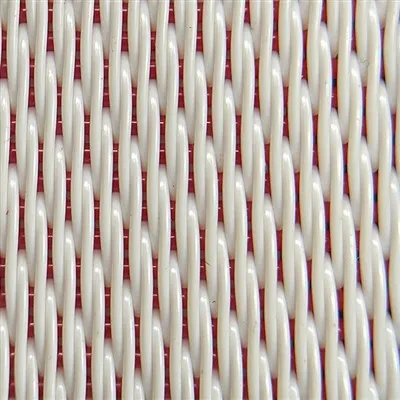
Hey there! As a supplier of Triple Layer Forming Fabrics, I've seen firsthand how the weave pattern of these fabrics can have a huge impact on paper quality. In this blog, I'll be diving into the nitty - gritty of how different weave patterns in triple layer forming fabrics affect the paper we all use every day.
Let's start with what triple layer forming fabrics are. They're a key component in the papermaking process. These fabrics are designed to support the wet paper web during the forming stage, allowing water to drain out while retaining the fibers that make up the paper. The weave pattern of these fabrics is like the blueprint for how the paper will turn out.
The Basics of Weave Patterns
There are several common weave patterns used in triple layer forming fabrics. One of the most popular is the plain weave. In a plain weave, the warp and weft yarns cross over each other in a simple over - under pattern. This pattern provides a relatively smooth surface, which can result in a paper with a consistent and even texture. The plain weave is great for producing high - quality papers that require a smooth finish, like printing papers.


Another common pattern is the twill weave. Twill weaves have a diagonal pattern created by the way the warp and weft yarns cross. This pattern offers better stability and durability compared to the plain weave. It can also affect the paper's porosity. Papers made with twill - woven triple layer forming fabrics tend to have a more open structure, which can be beneficial for applications where good air permeability is needed, such as some types of packaging papers.
Then there's the satin weave. Satin weaves have long floats of yarns on the surface, creating a very smooth and shiny appearance. When used in triple layer forming fabrics, satin weaves can give the paper a luxurious feel. However, they may not be as strong as twill or plain weaves in some cases.
Impact on Paper Strength
The weave pattern of triple layer forming fabrics can significantly influence the strength of the paper. For example, a twill weave provides better interlacing of the yarns, which can transfer more stress and load within the fabric. This means that the paper formed on a twill - woven fabric can have better tensile strength. On the other hand, a plain weave may not be as effective in distributing stress, resulting in a paper that is slightly weaker in some aspects.
If you're making a paper that needs to withstand a lot of handling, like a cardboard box or a heavy - duty wrapping paper, a twill - woven triple layer forming fabric might be the way to go. The increased strength can prevent tearing and ensure that the paper holds up well under pressure.
Surface Smoothness
Surface smoothness is another crucial factor in paper quality. A smooth paper surface is essential for printing applications, as it allows for better ink transfer and sharper images. Plain and satin weaves are known for producing papers with a smooth surface. The even and regular interlacing in a plain weave creates a flat surface, while the long floats in a satin weave give the paper a glossy and smooth finish.
If you're in the business of printing high - end magazines or brochures, you'll want to use a triple layer forming fabric with a weave pattern that promotes surface smoothness. This will ensure that your printed materials look professional and of high quality.
Porosity and Drainage
Porosity is the measure of how much air or liquid can pass through the paper. The weave pattern of the triple layer forming fabric plays a big role in determining the paper's porosity. A twill weave, with its more open structure, allows for better drainage during the papermaking process. This means that water can be removed more efficiently from the wet paper web, resulting in a paper with a higher porosity.
On the other hand, a plain or satin weave may have a more closed structure, which can reduce the porosity of the paper. This can be beneficial for applications where you want to control the amount of air or liquid that passes through the paper, such as in some types of specialty papers.
Fiber Retention
Fiber retention is all about keeping the fibers in the paper during the forming process. A well - designed weave pattern in the triple layer forming fabric can help ensure that the fibers are retained effectively. A pattern with a tight interlacing, like a plain weave, can prevent fibers from escaping through the fabric. This results in a paper with a higher fiber content, which can improve its strength and quality.
However, if the weave pattern is too tight, it can also affect the drainage of water. So, finding the right balance is crucial. Twill weaves can offer a good compromise between fiber retention and drainage, as they have a relatively open structure while still providing enough support to hold the fibers in place.
Cost - Effectiveness
When it comes to choosing the right triple layer forming fabric, cost - effectiveness is also an important consideration. Some weave patterns may be more expensive to produce than others. For example, satin weaves often require more complex manufacturing processes, which can drive up the cost.
As a supplier, I understand that you want to get the best value for your money. That's why it's important to consider the specific requirements of your paper production. If you're making a high - end paper that requires a smooth surface and a luxurious feel, a satin - woven triple layer forming fabric might be worth the extra cost. But if you're producing a more standard paper, a plain or twill weave could be a more cost - effective option.
Conclusion
In conclusion, the weave pattern of triple layer forming fabrics has a profound impact on paper quality. Whether it's strength, surface smoothness, porosity, fiber retention, or cost - effectiveness, each aspect of paper quality is influenced by the way the fabric is woven.
As a supplier of Paper Machine Cloth forming Fabric, Single Layer Forming Fabrics, and Two And A Half Layer Papermaking Forming Wire, I'm here to help you choose the right triple layer forming fabric for your specific needs. If you're interested in learning more about our products or want to discuss your paper production requirements, don't hesitate to reach out. We can work together to find the perfect solution for your business.
References
- Smith, J. (2020). "The Science of Papermaking". Publisher: PaperTech Press.
- Johnson, A. (2019). "Weave Patterns in Forming Fabrics and Their Impact on Paper Quality". Journal of Paper Science, 15(2), 78 - 92.