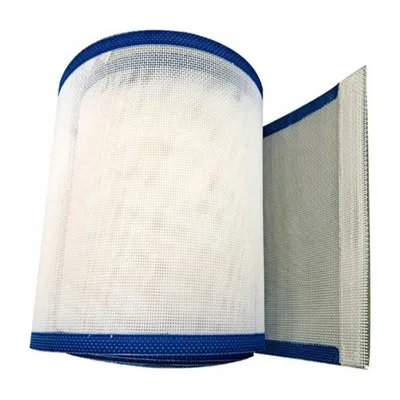
Moisture resistance is a critical property when it comes to polyester press filter fabric. As a supplier of Polyester Press Filter Fabric, I have witnessed firsthand the importance of this characteristic in various industrial applications. In this blog post, I will delve into what moisture resistance means for polyester press filter fabric, its significance, and how it affects the performance of the fabric.
Understanding Moisture Resistance
Moisture resistance refers to the ability of a material to resist the penetration and absorption of water. In the context of polyester press filter fabric, it is the capacity of the fabric to prevent water from seeping through and maintain its structural integrity in wet conditions. This property is crucial because press filter fabrics are often used in applications where they come into contact with liquids, such as in sludge dewatering processes.
Polyester, as a synthetic fiber, has inherent moisture - resistant properties. It has a low affinity for water, which means it does not absorb water easily. This is in contrast to natural fibers like cotton, which can absorb a significant amount of water, leading to swelling and a decrease in strength. The molecular structure of polyester is tightly packed, and its hydrophobic nature allows it to repel water.
Significance of Moisture Resistance in Polyester Press Filter Fabric
1. Maintaining Structural Integrity
When a press filter fabric is exposed to moisture, it can experience changes in its physical properties. If the fabric absorbs water, it may become weak, lose its shape, and eventually fail. Moisture - resistant polyester press filter fabric maintains its strength and shape even when in contact with water. This ensures that the fabric can withstand the pressure applied during the filtration process without tearing or deforming.
2. Preventing Bacterial Growth
Moist environments are breeding grounds for bacteria and fungi. If a press filter fabric absorbs water, it can create a favorable environment for microbial growth. This not only poses a health risk but can also damage the fabric over time. Polyester's moisture - resistant property helps to keep the fabric dry, reducing the likelihood of bacterial and fungal growth.
3. Improving Filtration Efficiency
In sludge dewatering applications, the ability of the press filter fabric to resist moisture is directly related to its filtration efficiency. A moisture - resistant fabric allows for better separation of solids and liquids. It prevents the re - wetting of the filtered solids, which can improve the dryness of the final product. This is especially important in industries such as wastewater treatment, mining, and food processing, where efficient dewatering is essential.


Factors Affecting the Moisture Resistance of Polyester Press Filter Fabric
1. Fabric Construction
The way the polyester press filter fabric is constructed can significantly affect its moisture resistance. Fabrics with a tight weave or high density are generally more moisture - resistant than those with a loose weave. A tight weave reduces the spaces between the fibers, making it more difficult for water to penetrate. Additionally, the use of special finishes or coatings can enhance the moisture - resistant properties of the fabric.
2. Fiber Quality
The quality of the polyester fibers used in the fabric also plays a role in its moisture resistance. High - quality polyester fibers have a more uniform molecular structure, which results in better water - repellent properties. Fibers that are free from impurities and have a consistent diameter are more likely to provide good moisture resistance.
3. Environmental Conditions
The environment in which the press filter fabric is used can impact its moisture resistance. For example, in high - humidity environments, the fabric may be more exposed to moisture. Additionally, the type of liquid it comes into contact with, such as acidic or alkaline solutions, can also affect its performance. Some chemicals may react with the polyester fibers, reducing their moisture - resistant properties.
Applications of Moisture - Resistant Polyester Press Filter Fabric
1. Sludge Dewatering
One of the most common applications of polyester press filter fabric is in sludge dewatering. In wastewater treatment plants, sludge is a by - product that needs to be dewatered to reduce its volume and make it easier to handle. Polyester Sludge Dewatering Belt and Polyester Sludge Dewatering Mesh are used in belt press filters to separate the solids from the liquid in the sludge. The moisture - resistant property of the fabric ensures efficient dewatering and prevents the re - wetting of the sludge.
2. Mining
In the mining industry, press filter fabrics are used to separate minerals from the slurry. The moisture - resistant polyester press filter fabric can withstand the harsh conditions in mining operations, including contact with acidic and alkaline solutions. It helps to improve the efficiency of the separation process and reduces the amount of water in the final product.
3. Food Processing
In food processing, press filter fabrics are used for various filtration and dewatering processes. For example, in the production of fruit juices, the fabric is used to separate the pulp from the juice. The moisture - resistant property of the polyester fabric ensures that the juice is not contaminated with water and maintains its quality.
Testing the Moisture Resistance of Polyester Press Filter Fabric
There are several methods to test the moisture resistance of polyester press filter fabric. One common method is the water repellency test, which measures the ability of the fabric to repel water droplets. The fabric is placed on a flat surface, and water droplets are dropped onto it. The angle at which the water droplets roll off the fabric is measured. A higher angle indicates better water repellency.
Another test is the moisture absorption test, which measures the amount of water absorbed by the fabric over a period of time. The fabric is weighed before and after being immersed in water for a specific period. The difference in weight indicates the amount of water absorbed.
Conclusion
Moisture resistance is a vital property of polyester press filter fabric. It ensures the fabric's structural integrity, prevents bacterial growth, and improves filtration efficiency. As a supplier of Polyester Press Filter Fabric, I understand the importance of providing high - quality, moisture - resistant fabrics to our customers. Whether you are in the wastewater treatment, mining, or food processing industry, our polyester press filter fabrics can meet your needs.
If you are interested in purchasing our polyester press filter fabric or have any questions about its moisture resistance or other properties, please feel free to contact us for further discussion and potential procurement. We are committed to providing you with the best products and services to meet your industrial filtration needs.
References
- ASTM International. (2021). Standard test methods for water resistance of textile fabrics. ASTM D5834 - 19.
- Fibre2Fashion. (2022). Polyester: Properties, uses, and production. Retrieved from Fibre2Fashion database.
- Textile Institute. (2020). Handbook of textile testing and quality control. Woodhead Publishing.