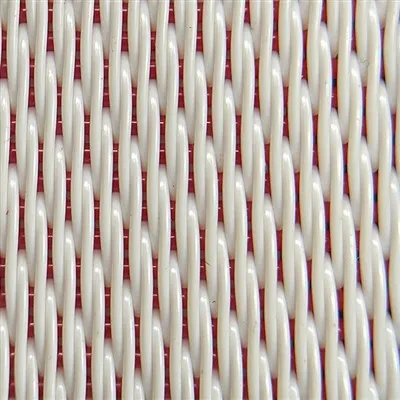
Hey there! As a supplier of Vacuum Filter Belt Polyester, I've seen firsthand how the porosity of these belts can have a huge impact on their performance. In this blog, I'm gonna break down what porosity is, how it affects the performance of vacuum filter belt polyester, and why it matters to you.
What is Porosity in Vacuum Filter Belt Polyester?
Let's start with the basics. Porosity refers to the amount of empty space or pores within a material. In the case of vacuum filter belt polyester, these pores are tiny openings that allow liquids and gases to pass through while trapping solid particles. Think of it like a sieve. The size, number, and distribution of these pores determine how well the belt can filter out solids from liquids or gases.
How Porosity Affects Filtration Efficiency
One of the most important factors in the performance of a vacuum filter belt polyester is its filtration efficiency. This is basically how well the belt can separate solids from liquids or gases. The porosity of the belt plays a crucial role in this process.
If the porosity is too high, meaning there are large or numerous pores, the belt may not be able to trap smaller solid particles effectively. This can result in a lower quality filtrate, as more solids will pass through the belt along with the liquid or gas. On the other hand, if the porosity is too low, the belt may become clogged quickly, reducing the flow rate of the filtrate and increasing the pressure drop across the belt. This can lead to a decrease in overall filtration efficiency and an increase in energy consumption.
For example, in a FGD Filter Belt used in a flue gas desulfurization process, the ideal porosity is carefully calibrated to ensure that it can effectively remove sulfur dioxide and other pollutants from the flue gas while maintaining a reasonable flow rate. If the porosity is off, the filter belt may not be able to meet the required environmental standards or may require frequent replacement, which can be costly.
Impact on Flow Rate
The porosity of a vacuum filter belt polyester also has a significant impact on the flow rate of the filtrate. A belt with higher porosity generally allows for a higher flow rate, as there are more pathways for the liquid or gas to pass through. This can be beneficial in applications where a large volume of filtrate needs to be processed quickly.
However, as mentioned earlier, a belt with extremely high porosity may not provide adequate filtration. So, it's a balancing act. You need to find a belt with the right porosity to achieve the optimal combination of filtration efficiency and flow rate.
In some industrial processes, such as mining or chemical manufacturing, where large volumes of slurry need to be filtered, the flow rate is a critical factor. Using a Vacuum Filter Belt Polyester with the appropriate porosity can help ensure that the filtration process is efficient and cost - effective.
Effect on Belt Lifespan
Another aspect affected by the porosity of a vacuum filter belt polyester is its lifespan. A belt with the wrong porosity can experience premature wear and tear.
If the porosity is too low, the belt is more likely to become clogged with solid particles. This can cause increased friction between the belt and the filter equipment, leading to mechanical damage. Additionally, the high pressure drop across the clogged belt can put extra stress on the belt material, causing it to break or tear more easily.
Conversely, a belt with extremely high porosity may not be as durable. The large pores can make the belt more susceptible to damage from abrasion and chemical attack. For instance, in a Polyester Vacuum Filter Belt for Fgd, which is exposed to harsh chemicals in the flue gas desulfurization process, a belt with improper porosity may degrade quickly, reducing its useful lifespan.
Choosing the Right Porosity for Your Application
So, how do you choose the right porosity for your vacuum filter belt polyester? Well, it depends on several factors.
First, you need to consider the size and nature of the solid particles you're trying to filter. If you're filtering large particles, a belt with higher porosity may be sufficient. But if you need to filter fine particles, a belt with lower porosity will be required.
Second, think about the flow rate requirements of your process. If you need a high flow rate, you may be able to tolerate a slightly higher porosity as long as it still meets your filtration efficiency needs.


Third, consider the chemical and physical environment in which the belt will be used. Harsh chemicals or high - temperature conditions may require a belt with a specific porosity and material composition to ensure durability.
As a supplier, we have a wide range of vacuum filter belt polyester products with different porosities. We can work with you to understand your specific requirements and recommend the best belt for your application.
Conclusion
In conclusion, the porosity of a vacuum filter belt polyester is a critical factor that affects its performance in terms of filtration efficiency, flow rate, and lifespan. Choosing the right porosity is essential for achieving optimal results in your filtration process.
If you're in the market for a vacuum filter belt polyester, don't hesitate to reach out. We're here to help you find the perfect solution for your needs. Whether you're looking for a FGD Filter Belt, a Vacuum Filter Belt Polyester, or a Polyester Vacuum Filter Belt for Fgd, we've got you covered. Contact us today to start a conversation about your filtration requirements and let's work together to find the best belt for your application.
References
- Smith, J. (2020). "Filtration Technology: Principles and Applications". Elsevier.
- Jones, A. (2019). "Polymer Materials for Filtration". Wiley.