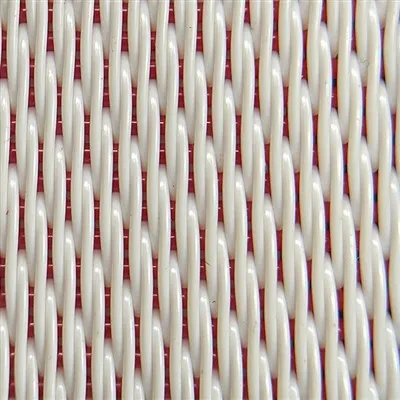
As a supplier of Polyester Woven Dryer Mesh, I've witnessed firsthand the widespread use and many advantages of this product in various industries. However, like any material, it also has its share of disadvantages. In this blog, I'll delve into the drawbacks of Polyester Woven Dryer Mesh to provide a comprehensive understanding for potential customers.
1. Limited Heat Resistance
One of the primary disadvantages of polyester woven dryer mesh is its relatively low heat resistance. Polyester is a synthetic polymer that begins to soften and deform at temperatures around 150 - 200°C (302 - 392°F). In industrial drying processes where high temperatures are often required, such as in some food drying or chemical processing applications, this can be a significant limitation.
For instance, in the production of certain types of snacks that require high - temperature baking, the polyester mesh may not be able to withstand the heat without losing its shape or integrity. This can lead to uneven drying, as the mesh may sag or warp, causing inconsistent airflow through the material being dried. As a result, the quality of the final product may be compromised.
2. Static Electricity Generation
Polyester is known to generate static electricity easily. When used in a dryer, the constant movement of the mesh and the friction between the mesh and the material being dried can create a significant amount of static charge. This static electricity can cause several problems.
Firstly, it can attract dust and other small particles, which can contaminate the material being dried. In industries where cleanliness is crucial, such as the pharmaceutical or electronics industries, this can be a major issue. Secondly, static electricity can also pose a safety risk. In some environments, a build - up of static charge can lead to sparks, which may ignite flammable substances. This is especially dangerous in industries dealing with volatile chemicals or flammable gases.
3. Chemical Sensitivity
Polyester woven dryer mesh is sensitive to certain chemicals. Strong acids, alkalis, and some solvents can damage the polyester fibers, causing them to weaken or break down. For example, in industries where the drying process involves the use of acidic or alkaline solutions, the polyester mesh may not be suitable.
In the textile industry, where dyes and chemicals are commonly used, the polyester mesh may react with these substances, leading to discoloration, loss of strength, and reduced lifespan. This means that in chemical - intensive drying applications, alternative materials may need to be considered.


4. Poor Abrasion Resistance
Compared to some other materials, polyester woven dryer mesh has relatively poor abrasion resistance. During the drying process, the mesh is often in contact with the material being dried, as well as the moving parts of the dryer. This constant friction can cause the polyester fibers to wear down over time.
In applications where the material being dried is rough or abrasive, such as in the drying of sand or gravel, the polyester mesh may not last long. The wear and tear can lead to holes and tears in the mesh, which can affect the drying efficiency and may even cause the material being dried to fall through the mesh.
5. Environmental Concerns
Polyester is a synthetic material made from petrochemicals, which are non - renewable resources. The production of polyester involves a significant amount of energy and can have a negative impact on the environment. Additionally, polyester is not biodegradable, which means that when the dryer mesh reaches the end of its lifespan, it will remain in landfills for a long time.
In today's environmentally conscious world, many companies are looking for more sustainable alternatives. The environmental impact of polyester woven dryer mesh may be a deterrent for some customers who are committed to reducing their carbon footprint.
6. Cost - Benefit Considerations
While polyester woven dryer mesh is generally more affordable than some other high - performance materials, the long - term cost - benefit may not be as favorable as it seems. Due to its limited heat resistance, poor abrasion resistance, and chemical sensitivity, the mesh may need to be replaced more frequently.
This means that over time, the cost of purchasing and replacing the mesh can add up. In comparison, more expensive but more durable materials may offer a better cost - benefit ratio in the long run, especially in high - volume or high - stress drying applications.
Conclusion
Despite these disadvantages, polyester woven dryer mesh still has its place in many industries. It is cost - effective, lightweight, and easy to install. However, it's important for customers to be aware of its limitations so that they can make an informed decision when choosing a dryer mesh for their specific application.
If you're considering using polyester woven dryer mesh for your drying needs, I encourage you to carefully evaluate your requirements. Consider factors such as the temperature, chemical environment, and abrasion levels in your drying process. If you have any questions or need more information, please feel free to reach out to us. We're here to help you find the best solution for your drying needs.
For more information about dryer fabrics, you can visit Dryer Fabrics. If you're interested in paper machine clothing woven dryer fabrics, check out Paper Machine Clothing Woven Dryer Fabrics. And for spiral dryer mesh belts, visit Spiral Dryer Mesh Belt.
If you're interested in purchasing our Polyester Woven Dryer Mesh or discussing your specific requirements, we're ready to engage in a detailed procurement discussion. Contact us to explore how our products can meet your needs and solve your drying challenges.
References
- "Textile Materials and Their Selection" by John H. Wilson
- "Industrial Drying Technology" by Arun S. Mujumdar