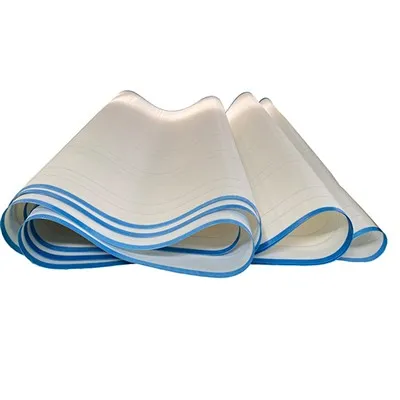
Hey there! As a supplier of Triple Layer Forming Fabrics, I'm super excited to share some insights on how to test the performance of these amazing fabrics.
Why Testing is Crucial
First off, let's talk about why testing the performance of triple layer forming fabrics is so important. These fabrics play a huge role in the paper - making process. They help in dewatering, forming a uniform paper web, and ensuring the quality of the final paper product. If the fabric doesn't perform well, it can lead to all sorts of problems like uneven paper thickness, poor strength, and even production delays. So, proper testing is essential to guarantee that the fabric meets the high - standards required in the paper industry.
Physical Properties Testing
One of the first things we look at when testing triple layer forming fabrics is their physical properties.
Thickness
The thickness of the fabric is a key factor. A consistent thickness across the fabric ensures uniform dewatering. We use a thickness gauge to measure it at multiple points on the fabric. If the thickness varies too much, it can cause uneven water removal during the paper - making process. For example, in a paper machine, if one part of the fabric is thicker than the rest, that area might dewater slower, leading to a non - uniform paper web.
Weight
The weight of the fabric is also crucial. A heavier fabric might be more durable but could also affect the dewatering rate. We measure the weight per unit area using a precision scale. By knowing the weight, we can determine if the fabric is suitable for a particular paper - making process. For instance, if you're making a lightweight paper, a lighter fabric might be more appropriate as it allows for faster dewatering.
Porosity
Porosity is another important physical property. It refers to the amount of open space in the fabric. We test porosity using a porosity tester. A fabric with the right porosity allows water to pass through easily during dewatering while retaining the paper fibers. If the porosity is too high, too many fibers might pass through with the water, resulting in a loss of paper quality. On the other hand, if it's too low, the dewatering process will be slow.


Chemical Resistance Testing
Triple layer forming fabrics are often exposed to various chemicals during the paper - making process. So, it's important to test their chemical resistance.
Acid and Alkali Resistance
We expose samples of the fabric to different concentrations of acids and alkalis. This helps us determine how well the fabric can withstand these chemicals without deteriorating. For example, in some paper - making processes, acidic or alkaline solutions are used for bleaching or sizing. If the fabric isn't resistant to these chemicals, it can break down over time, reducing its lifespan and performance.
Resistance to Other Chemicals
Apart from acids and alkalis, the fabric might also come into contact with other chemicals like dyes and additives. We test the fabric's resistance to these substances as well. This ensures that the fabric can maintain its integrity in different chemical environments.
Mechanical Performance Testing
The mechanical performance of the fabric is vital for its long - term use in a paper machine.
Tensile Strength
Tensile strength measures how much force the fabric can withstand before breaking. We use a tensile testing machine to apply a gradually increasing force to a fabric sample until it breaks. A high tensile strength is important because the fabric is under constant tension in a paper machine. If the tensile strength is too low, the fabric might tear during operation, causing production disruptions.
Abrasion Resistance
The fabric is constantly in contact with various parts of the paper machine, so it needs to be abrasion - resistant. We use an abrasion testing machine to simulate the wear and tear the fabric will experience in a real - world paper - making environment. A fabric with good abrasion resistance will last longer and require less frequent replacement.
Dewatering Performance Testing
Since dewatering is one of the main functions of triple layer forming fabrics, we pay special attention to testing this performance.
Dewatering Rate
We measure the dewatering rate by placing a wet paper web on the fabric and measuring how quickly the water is removed. A faster dewatering rate means higher production efficiency. We can adjust the fabric's design and properties to optimize the dewatering rate. For example, by changing the porosity or the structure of the fabric, we can improve how quickly water passes through.
Water Retention
We also measure the amount of water that the fabric retains after dewatering. A fabric that retains too much water can affect the quality of the paper. If the water content in the paper web is too high, it can lead to issues like wrinkling or poor drying.
Contact for Purchase and Discussion
If you're in the market for high - quality triple layer forming fabrics, I'd love to have a chat with you. We've got a wide range of products that are designed to meet the diverse needs of the paper industry. Whether you're looking for a fabric with specific physical properties, chemical resistance, or dewatering performance, we've got you covered. So, don't hesitate to reach out and start a conversation about your requirements.
Links to Related Products
If you're interested in learning more about our products, check out these links:
Paper Machine Clothing Triple Layer Forming Fabric
Two and Half Layer Forming Wrie
Polyester Forming Screen Forming Fabric
References
- Smith, J. (2020). "Advances in Paper Machine Clothing Technology". Journal of Paper Science.
- Brown, A. (2019). "Testing Methods for Forming Fabrics in the Paper Industry". Paper Technology Review.