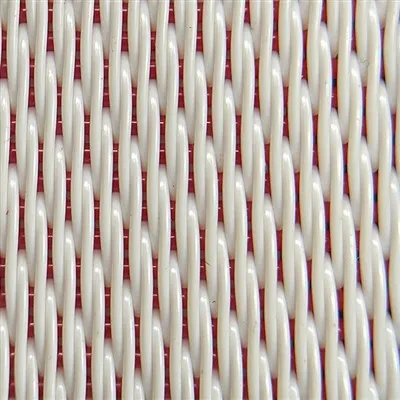
Hey there! As a supplier of Woven Press Filter Belts, I've seen firsthand how chemical compatibility can make or break the performance of these belts. In this blog, I'm gonna dive into what chemical compatibility is, why it's so important, and how it impacts the performance of woven press filter belts.
Let's start by understanding what chemical compatibility means. Simply put, it's about how well a material can withstand exposure to certain chemicals without degrading or losing its properties. When it comes to woven press filter belts, chemical compatibility is crucial because these belts are often used in industrial processes where they come into contact with a wide range of chemicals, such as acids, alkalis, solvents, and various industrial waste solutions.
Now, you might be wondering, why is chemical compatibility so important for woven press filter belts? Well, if a belt isn't chemically compatible with the substances it's exposed to, it can lead to a whole bunch of problems. For starters, the belt can start to deteriorate. This could mean that the fibers of the belt break down, which weakens the overall structure of the belt. As a result, the belt might tear more easily, reducing its lifespan and increasing the frequency of replacements.
Another issue is that chemical incompatibility can affect the filtration efficiency of the belt. When the belt is damaged by chemicals, its pores can become clogged or distorted. This means that it won't be able to separate solids from liquids as effectively as it should. In industrial applications, this can lead to lower quality filtrate, which might not meet the required standards for further processing or disposal.
Let's take a closer look at some of the specific impacts of chemical compatibility on the performance of woven press filter belts.
1. Physical Degradation
When a belt is exposed to chemicals that it's not compatible with, it can experience physical changes. For example, some chemicals can cause the belt to swell. This swelling can change the dimensions of the belt, making it difficult to fit properly on the filter press. It can also put extra stress on the belt, leading to premature wear and tear.
In addition, certain chemicals can cause the fibers of the belt to become brittle. This makes the belt more prone to cracking and breaking. Once the belt starts to crack, it can no longer function effectively as a filter, and it will need to be replaced.
2. Reduced Filtration Efficiency
As I mentioned earlier, chemical damage can clog the pores of the belt. When this happens, the flow of liquid through the belt is restricted. This means that it takes longer to filter the same amount of liquid, which can slow down the entire filtration process. In some cases, the clogged pores can also lead to uneven distribution of the filtrate, resulting in inconsistent filtration results.


3. Contamination of the Filtrate
If the belt is chemically damaged, it can release particles or chemicals into the filtrate. This can contaminate the filtrate, making it unsuitable for its intended use. For example, in a water treatment plant, if the filter belt releases harmful chemicals into the treated water, it can pose a risk to human health and the environment.
4. Increased Maintenance Costs
When a belt is not chemically compatible with the substances it's exposed to, it will need to be replaced more frequently. This means higher costs for purchasing new belts. In addition, the process of replacing the belt can be time-consuming and labor-intensive, which also adds to the overall maintenance costs.
So, how can you ensure chemical compatibility for your woven press filter belts? Well, the first step is to understand the chemicals that the belt will be exposed to. You need to know the type of chemicals, their concentration, and the temperature and pressure conditions under which they will be used.
Based on this information, you can choose a belt material that is resistant to these chemicals. For example, polyester is a popular choice for many applications because it has good chemical resistance to a wide range of substances. You can check out our Polyester Sludge Dewatering Mesh and Polyester Mesh Belts For Belt Filter Press for more options. Our Polyester Press Filter Fabric is also a great choice for applications where chemical resistance is important.
It's also a good idea to test the belt material with the chemicals before using it in a full-scale operation. This can help you identify any potential compatibility issues early on and make the necessary adjustments.
In conclusion, chemical compatibility is a critical factor in the performance of woven press filter belts. By choosing the right belt material and ensuring that it's compatible with the chemicals it will be exposed to, you can improve the efficiency and lifespan of the belt, reduce maintenance costs, and ensure the quality of the filtrate.
If you're in the market for high-quality woven press filter belts, we're here to help. We have a wide range of products that are designed to meet the needs of different industries. Whether you need a belt for a water treatment plant, a mining operation, or a food processing facility, we can provide you with the right solution. Contact us today to discuss your requirements and let's start a great partnership!
References
- Smith, J. (2018). Chemical Compatibility in Industrial Filtration. Journal of Industrial Filtration, 25(3), 123-135.
- Johnson, A. (2019). The Impact of Chemicals on Filter Belt Performance. Filtration Technology Review, 18(2), 45-52.
- Brown, C. (2020). Choosing the Right Filter Belt for Chemical Applications. Industrial Filtration Magazine, 30(4), 67-74.