What is the maximum acceleration a polyester mesh conveyor belt can handle?
As a supplier of Polyester Mesh Conveyor Belts, I often receive inquiries from customers about the performance limits of our products. One of the most common questions is: What is the maximum acceleration a polyester mesh conveyor belt can handle? In this blog post, I will delve into this topic, exploring the factors that influence the maximum acceleration and providing some practical insights for our customers.
Understanding Polyester Mesh Conveyor Belts
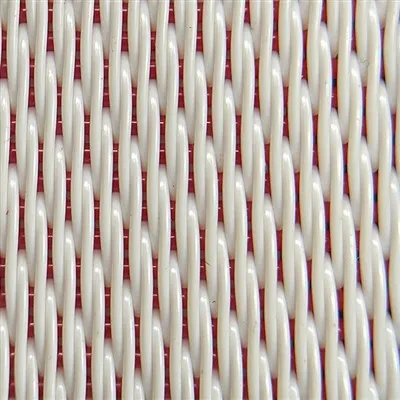
Polyester mesh conveyor belts are widely used in various industries due to their excellent properties. They are made from high - strength polyester fibers woven into a mesh structure. These belts offer advantages such as high temperature resistance, good air permeability, and resistance to chemicals. Polyester mesh conveyor belts are suitable for applications in food processing, heat treatment, and electronics manufacturing, among others. You can find more information about our Polyester Mesh Conveyor Belt on our website.
Factors Affecting the Maximum Acceleration
Several factors play a crucial role in determining the maximum acceleration that a polyester mesh conveyor belt can handle.
Belt Material and Construction
The quality and construction of the polyester mesh belt are fundamental. Higher - quality polyester fibers can withstand greater forces. The weaving pattern also matters. For example, a tightly woven mesh may provide more strength and stability compared to a loosely woven one. Our Polyester Plain Types Of Conveyor Belts are available in different weaving densities to meet various application requirements.


Load Characteristics
The weight and distribution of the load on the conveyor belt are significant factors. A heavier load will require more force to accelerate. Additionally, an unevenly distributed load can cause stress concentrations on the belt, reducing its ability to handle acceleration. For instance, in a food processing application where different - sized products are placed on the belt, the belt may experience varying stress levels during acceleration. Our Polyester Plain Woven Mesh Belt For Food Industrial is designed to handle the specific load characteristics of the food industry.
Belt Tension
Proper belt tension is essential for the smooth operation of the conveyor system. Insufficient tension can cause the belt to slip, while excessive tension can lead to premature wear and damage. When accelerating the belt, the tension needs to be adjusted to ensure that the belt can transmit the necessary force without slipping. The maximum acceleration is limited by the ability of the belt to maintain proper tension during the acceleration process.
Pulley Design
The size, shape, and surface characteristics of the pulleys also affect the maximum acceleration. Larger pulleys can reduce the bending stress on the belt, allowing for higher acceleration. A smooth - surfaced pulley can minimize friction and wear on the belt. The pulley arrangement, such as the distance between pulleys and the angle of wrap, also impacts the belt's performance during acceleration.
Calculating the Maximum Acceleration
To calculate the maximum acceleration that a polyester mesh conveyor belt can handle, we need to consider the following formula based on Newton's second law of motion: (F = ma), where (F) is the force, (m) is the mass of the load and the belt, and (a) is the acceleration.
The maximum force that the belt can withstand is determined by its tensile strength. The tensile strength of a polyester mesh belt is typically specified by the manufacturer. We can rearrange the formula to solve for the acceleration: (a=\frac{F}{m}).
However, this is a simplified calculation. In real - world applications, we also need to account for factors such as friction, belt sag, and dynamic forces. For example, the friction between the belt and the pulleys can either assist or oppose the motion, depending on the direction of the force.
Practical Considerations for Customers
When choosing a polyester mesh conveyor belt for an application with specific acceleration requirements, customers should consider the following:
Consultation with Experts
Our team of experts can help customers select the most suitable belt based on their specific needs. We can analyze the load characteristics, conveyor system design, and acceleration requirements to recommend the appropriate belt type and specifications.
Testing and Validation
Before full - scale implementation, it is advisable to conduct small - scale tests to evaluate the performance of the belt under the expected acceleration conditions. This can help identify any potential issues and ensure the reliability of the conveyor system.
Maintenance and Monitoring
Regular maintenance of the conveyor system is crucial to ensure the long - term performance of the belt. This includes checking the belt tension, pulley alignment, and lubrication. Monitoring the belt for signs of wear and damage can help prevent unexpected failures.
Conclusion
The maximum acceleration that a polyester mesh conveyor belt can handle is influenced by multiple factors, including belt material, load characteristics, belt tension, and pulley design. By understanding these factors and following the practical considerations, customers can select the right belt for their applications and ensure the efficient and reliable operation of their conveyor systems.
If you are interested in our polyester mesh conveyor belts or have any questions about the maximum acceleration requirements for your specific application, please feel free to contact us. We are committed to providing high - quality products and professional solutions to meet your needs.
References
- "Conveyor Belt Technology Handbook" by Conveyor Belt Manufacturers Association
- "Materials Science and Engineering: An Introduction" by William D. Callister, Jr. and David G. Rethwisch